

Last Updated: September 14, 2026
The Korean skincare vs natural organic skincare debate comes down to one question: do you want formulas built on fermentation science and clinical actives, or plant-based purity and minimal processing? This guide from Beautivana breaks down both philosophies so you can choose the routine that actually fits your skin, whether you're shopping in Atlanta or anywhere else in the U.S.
Korean beauty has become a dominant force in American skincare cabinets, and it's easy to see why. The category built its reputation on layering hydration, gentle exfoliation, and barrier support rather than harsh stripping. Natural organic skincare built its reputation on something equally appealing: fewer synthetic ingredients, cleaner sourcing, and transparency.
Here's the tension most guides skip. These two approaches aren't opposites so much as different answers to the same problem. Korean formulas often lean on lab-verified actives and fermented ingredients, while organic lines lean on botanical extracts and cold-pressed oils. Neither is automatically better. What matters is which one matches your skin's actual behavior.
Below, we'll walk through the ingredient philosophies, product formats, and specific treatments, including PDRN, glass skin routines, LED therapy, and barrier serums, so you can decide with clear criteria instead of marketing language.
Fermentation sits at the center of Korean formulation. Ingredients like rice extract, snail secretion filtrate, and various botanicals are fermented to break them into smaller molecules, which many formulators believe improves how comfortably skin accepts them. The result is a philosophy that treats skincare as a delivery problem: how do you get beneficial ingredients into skin without irritation?
Natural organic skincare approaches the same problem from the sourcing side. The priority is what goes in, not how it's processed. Certified organic lines typically avoid synthetic preservatives, fragrances, and silicones, favoring plant oils, butters, and extracts.
The trade-offs run in both directions:
A common mistake is assuming "natural" means "gentle for everyone." Essential oils and botanical extracts are among the most frequent contact irritants in cosmetics. The U.S. Food and Drug Administration's cosmetic labeling guidance is a useful reference for understanding how ingredients are disclosed on labels, which helps you compare an organic serum and a Korean ampoule on equal footing.
Korean routines are famous for their length, but the structure matters more than the step count. A typical K-beauty routine follows a thin-to-thick layering logic: oil cleanse, water cleanse, toner, essence, serum or ampoule, moisturizer, and sunscreen. Each layer is lightweight, and hydration builds gradually.
Organic routines tend to be shorter and richer. Cleansing is often a single step with a cream or oil-based cleanser, followed by a facial oil, balm, or thick moisturizer. The emphasis is on sealing moisture in rather than layering it.
Neither structure is superior. What changes is how much time and how many products you're willing to manage.
| Factor | Korean Skincare | Natural Organic Skincare |
|---|---|---|
| Core philosophy | Fermentation and clinical actives | Plant-based purity, minimal processing |
| Typical routine length | 5-7 lightweight layers | 2-4 richer layers |
| Hero ingredients | Snail mucin, rice extract, PDRN, ferments | Cold-pressed oils, botanical butters, extracts |
| Texture profile | Thin, watery, fast-absorbing | Creamy, occlusive, emollient |
| Best for | Dehydrated, dull, texture-focused concerns | Reactive, sensitized, minimalist routines |
| Time commitment | Higher (layering) | Lower (fewer steps) |
For anyone in Atlanta dealing with humidity swings between seasons, the layering approach often adapts more easily. You can drop a layer in summer and add one in winter without replacing your entire routine.

The table above captures the structural differences, but the practical decision usually comes down to three criteria: your skin's reactivity, your willingness to maintain a multi-step routine, and whether you want fast visible hydration or slow, gentle support.
Shop Korean Skincare & Beauty Devices →
Here's how to think about it:
PDRN, short for polydeoxyribonucleotide, is a DNA-derived ingredient that Korean skincare brands have popularized for its skin-repair and hydration positioning. It's typically sourced from salmon DNA fragments and appears in ampoules, serums, and treatment kits aimed at supporting the skin's natural renewal processes.
The benefits of PDRN in skincare center on three areas: supporting the skin barrier, improving the feel of elasticity, and delivering deep hydration without a heavy finish. Because PDRN is usually formulated into lightweight serums and essences, it layers easily into a Korean routine.
Where it fits practically:
If you want to build a PDRN-centered routine, the LED PDRN Facial Kit brings PDRN treatment together with LED light therapy in one at-home system.
One honest limitation: PDRN is a cosmetic ingredient, not a medical treatment. It supports how skin feels and looks, but it won't replace professional dermatologic care for diagnosed conditions.
Glass skin is the K-beauty term for skin that looks so hydrated and smooth it appears almost translucent, with light reflecting evenly across the surface. Achieving it at home depends far more on consistent hydration layering than on any single product.
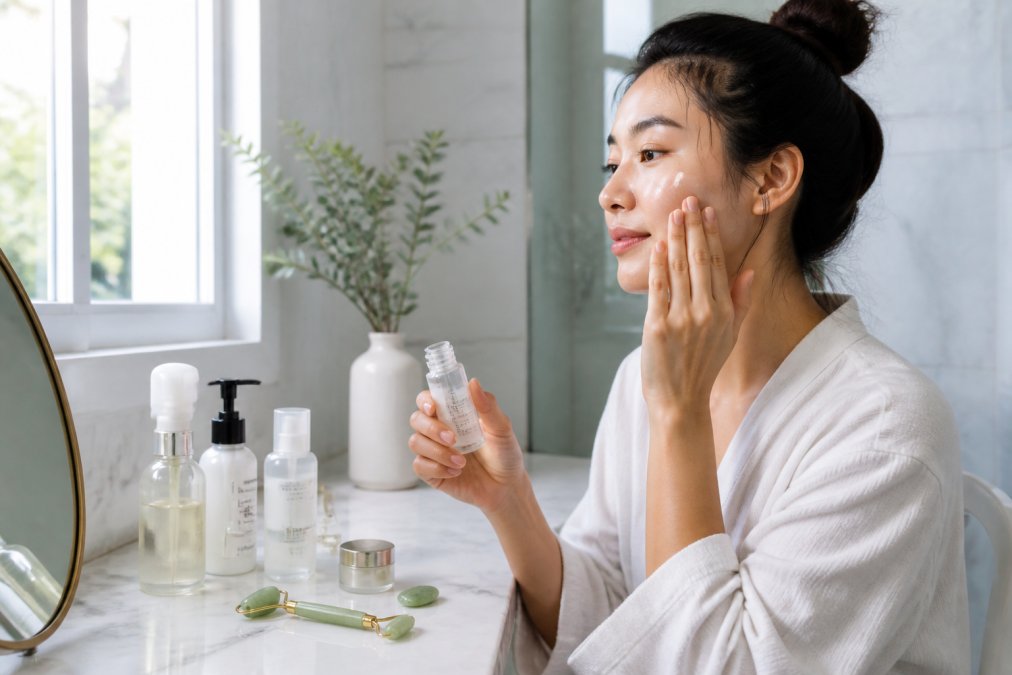
The routine that produces glass skin has a specific logic. You hydrate in thin layers, seal them, and repeat daily. Skipping the sealing step is the most common reason people layer six products and still look dull.
Here's a workable sequence:
The Beautivana Glass Skin Bundle was built around exactly this sequence, which makes it the simplest starting point if you're new to layering. If you want a full treatment session rather than a daily routine, the Ultimate Hydration Facial combines the same principles into one guided at-home facial.
The best hydrating serums for skin barrier support share three traits: humectants that pull water in, soothing ingredients that calm reactivity, and a lightweight texture that layers without pilling. Barrier-focused serums are not the same as anti-aging serums, and mixing them up is a common mistake.
What to look for:
The Beautivana Cica Collagen Serum fits this profile directly, combining soothing centella with collagen for a serum that supports barrier comfort. For a moisturizing layer on top, the Beautivana Snail Mucin 92% Moisturizer uses a high concentration of snail secretion filtrate to hold hydration without a heavy finish.
Cleansing matters here too. A barrier-friendly routine starts with a cleanser that doesn't strip. The Beautivana Non-Drying Glycerin Cleanser is built on a 50% glycerin formula with aloe, centella asiatica, and oat, and the Beautivana Mung Bean Cleansing Oil handles the first cleanse with mung bean extract and camellia seed oil. For gentle periodic exfoliation, the Beautivana Clean Rice Enzyme Powder Wash activates with water and lifts surface buildup without acting like a scrub.
Shop Korean Skincare & Beauty Devices →

LED light therapy for skin rejuvenation uses specific wavelengths of light to support the skin's appearance, most commonly red light for firmness and blue light for breakout-prone skin. Korean beauty brands moved LED from clinic treatment rooms into at-home masks and devices, which is why the category grew so quickly in the U.S.
The appeal is straightforward: it's non-invasive, requires no downtime, and fits into an evening routine while you do something else. Sessions typically run 10 to 20 minutes.
What most guides miss is consistency. LED devices are not one-time treatments. Results build over weeks of regular use, and skipping sessions resets your progress. If you're skeptical about buying beauty tech without trying it, start with a device that has a clear usage schedule and support documentation rather than the cheapest option available.
The Beautivana LED Glass Skin System pairs LED sessions with the hydration steps that support light-treated skin, and the LED PDRN Facial Kit combines LED with PDRN for a repair-focused routine. For overnight barrier work after a session, the Beautivana Moisturizing Lip Sleeping Mask handles moisture recovery while you sleep.
Korean skincare suits anyone whose primary concerns are dehydration, dullness, uneven texture, or loss of glow, and who is willing to maintain a layered routine. It's especially strong for people who want visible hydration quickly and enjoy the ritual of a multi-step evening routine.
Natural organic skincare suits anyone with reactive or sensitized skin, a preference for minimal ingredient lists, or a genuine dislike of multi-step routines. If you've tried layering products and found it tedious, an organic oil-and-balm routine will be easier to sustain.
The honest answer for most people is that the choice isn't permanent. Skin changes with season, stress, travel, and age. A routine that worked at 35 may need different support at 50. Rather than committing to one camp, build around what your skin is doing now.
For shoppers in Atlanta and across the U.S. looking for authentic Korean formulas without the counterfeit risk that comes with third-party marketplaces, buying from a curated retailer matters. Beautivana ships Korean skincare, facial devices, serums, and treatment kits directly, and the catalog is built around the specific routines covered above.
Choosing between Korean skincare and natural organic skincare isn't about picking a side. It's about matching your routine to what your skin actually needs right now, and adjusting as those needs change. Beautivana carries the hydration layers, barrier serums, LED devices, and overnight treatments that make either approach work, with fast U.S. shipping and a curated catalog built for at-home results. Explore the Korean skincare and beauty device collection at Beautivana and build a routine you'll actually keep.
Korean skincare is not inherently natural or organic. It often uses lab-developed ingredients like PDRN, peptides, and fermented extracts alongside plant-based ones. Some Korean brands offer organic lines, but the category as a whole prioritizes efficacy and hydration over a strict natural label. If you want organic certification, check individual product labels.
Korean skincare focuses on hydration, layering, and advanced ingredients such as snail mucin, PDRN, and fermented rice. Western organic brands typically avoid synthetic chemicals and emphasize plant-derived, certified organic ingredients. Korean routines often include more steps and target glass skin, while organic routines lean toward minimalism and purity. Both can support skin barrier health, but they approach it differently.
PDRN is a DNA-derived ingredient that supports skin repair and hydration, often used in Korean treatments. Traditional organic ingredients like aloe, jojoba, and shea focus on nourishment and soothing. PDRN may offer more targeted rejuvenation, while organic ingredients provide gentle, plant-based care. Some people combine both for a balanced routine that addresses barrier support and visible glow.
Yes, you can combine them. Start with a Korean double cleanse using an oil and water-based cleanser, then apply an organic hydrating toner or serum. Follow with a Korean essence or ampoule, and finish with an organic moisturizer if you prefer. Patch test new combinations and introduce one product at a time to avoid irritation. This hybrid approach lets you benefit from both philosophies.