

Last Updated: August 8, 2026
A hydrating serum is a lightweight, fast-absorbing liquid formula designed to deliver concentrated moisture and active ingredients deep into the skin's layers. Unlike heavier creams, serums penetrate quickly because of their smaller molecular weight, allowing humectants like hyaluronic acid and glycerin to draw water into the skin while peptides and niacinamide support the skin barrier. At Beautivana, we've curated hydrating serums that combine Korean skincare innovation with clinical-grade ingredients to address the specific moisture needs of aging skin.

Hydrating serums work through a multi-layered mechanism. Humectants bind water molecules and pull them into the dermis, while emollients smooth the skin's surface and prevent transepidermal water loss. When applied to damp skin, a hydrating serum creates an optimal environment for moisture absorption, making it the foundation of any anti-aging routine. Your skin naturally loses moisture throughout the day, especially in dry climates or heated indoor environments. A quality hydrating serum acts as a moisture reservoir, replenishing depleted hydration levels before they show up as fine lines or dullness.
Visible plumpness and radiance appear within days. Properly hydrated skin reflects light differently, looking dewy and younger. Hydrated skin cells function better, communicate more effectively, and respond better to other actives in your routine.
Fine lines and wrinkles become less pronounced. When skin is dehydrated, fine lines look deeper. Hydration plumps the skin from within, softening the appearance of lines while long-term use supports collagen production and skin elasticity.
Your other skincare products work better. A hydrated skin barrier is more receptive to active ingredients. Retinoids, vitamin C, and peptides all perform more effectively on properly moisturized skin. By establishing a solid hydration base with a quality serum, you're optimizing the entire efficacy of your routine.
Skin barrier function improves, reducing sensitivity and irritation. Hydrating serums with niacinamide and peptides actively support barrier repair, leading to fewer breakouts and less sensitivity to environmental stressors.
Environmental protection increases. A well-hydrated skin barrier resists environmental stress better than dehydrated skin. Hydrating serums with antioxidants also provide some protection against pollution and UV damage, though they should always be paired with sunscreen.
Tight, uncomfortable skin that feels stiff is the most obvious sign. The sensation of "pulling" across your face, especially around the eyes and cheeks, signals that hydration levels have dropped below optimal.
Fine lines appear more pronounced, especially around the eyes and mouth. These aren't permanent wrinkles; they're dehydration lines that disappear once hydration is restored. If you notice your fine lines look worse in the morning or after air travel, dehydration is almost certainly the culprit.
Dullness and uneven skin tone develop when skin cells aren't properly hydrated. Dehydrated skin doesn't reflect light evenly, appearing flat and gray rather than luminous.
Increased sensitivity and irritation often accompany dehydration. Your skin reacts more strongly to products that normally wouldn't bother you, signaling that its protective barrier is compromised.
Flaking or rough texture indicates severely dehydrated skin. You might notice visible dry patches or a sandpaper-like texture, especially on the forehead or cheeks.
A serum is a concentrated treatment with smaller molecular particles that penetrate deep into the skin. Serums are lightweight, fast-absorbing, and designed to deliver active ingredients like hyaluronic acid, peptides, and niacinamide into the dermis. They provide hydration and treatment but don't create a protective barrier on the skin's surface.
A moisturizer is a heavier formulation designed to create an occlusive barrier that prevents transepidermal water loss. Moisturizers contain emollients and occlusives that sit on top of the skin, locking in hydration from the serum beneath. Without a moisturizer over your serum, much of that hydration evaporates within minutes.
Think of it this way: a serum is like drinking water to hydrate from within, and a moisturizer is like wearing a coat to prevent that hydration from escaping. You need both for optimal results.
The layering order matters significantly. Always apply serum first to damp skin, wait 30-60 seconds for it to absorb, then apply moisturizer. This sequence ensures maximum penetration of the serum's active ingredients while the moisturizer locks everything in. Reversing this order means the heavier moisturizer blocks serum absorption, defeating the purpose entirely.
For aging skin in particular, a hydrating serum delivers concentrated hydration that a moisturizer alone cannot achieve. The serum creates the foundation; the moisturizer maintains it.
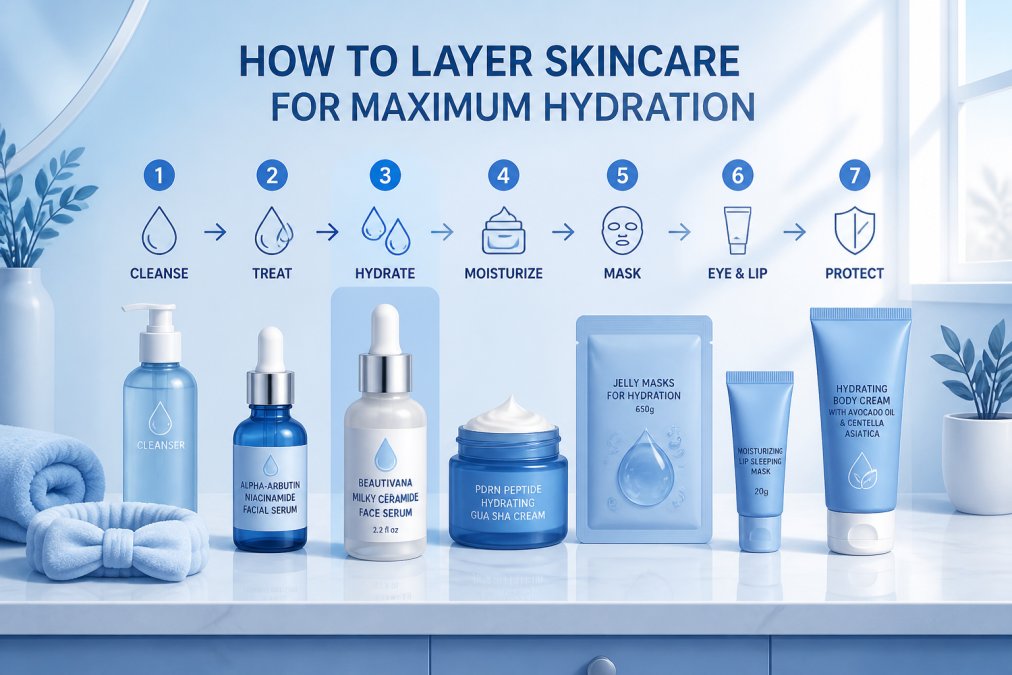
Start with a clean base. Cleanse your skin thoroughly with a gentle cleanser, then pat your skin until it's damp but not dripping wet. Damp skin absorbs serums far more effectively than completely dry skin. The ideal state is skin that's been gently patted but still has a light layer of moisture.
Apply your hydrating serum next, while skin is still damp. Use 2-3 drops for your face, warming the serum between your palms, then press it gently into your skin rather than rubbing. Wait 30-60 seconds for the serum to fully absorb before moving to the next step.
Layer any treatment serums or actives after your hydrating serum. If you use vitamin C, niacinamide boosters, or peptide serums, these go on after your primary hydrating serum. Each layer should be fully absorbed before the next one is applied.
Apply moisturizer while skin is still slightly damp from the serum. Don't wait for your serum to completely dry. Use an appropriate amount, about a nickel-sized amount for your entire face, and press it gently into your skin rather than rubbing.
Seal with an occlusive if you have very dry skin. In dry climates or during winter months, consider adding an occlusive oil or balm as the final step. This creates an extra barrier that prevents moisture loss overnight.
Morning routines are lighter; evening routines can be richer. In the morning, use a lightweight hydrating serum followed by a lightweight moisturizer and sunscreen. At night, you can layer more generously and use richer formulations.
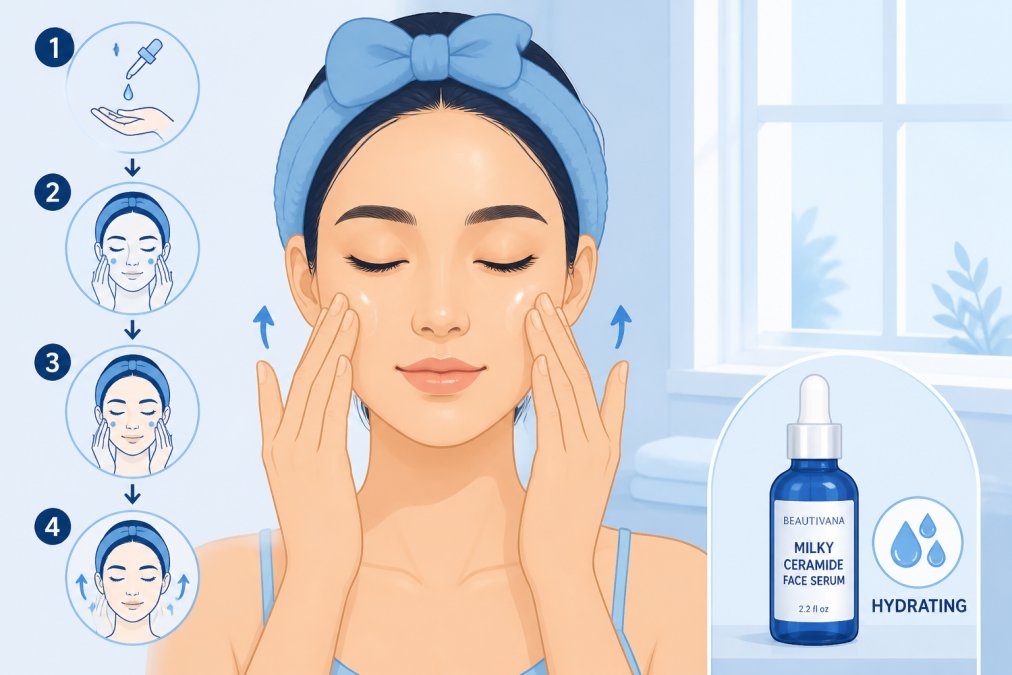
Use the correct amount. For facial serums, 2-3 drops is typically sufficient for your entire face. Using more doesn't improve results; it just wastes product and can make your skin feel sticky.
Warm the serum in your palms first. Dispense the serum into your palm, rub your hands together to warm it slightly, then press it onto your face. This warming step helps the serum spread evenly and absorb more effectively.
Press rather than rub. Use your fingertips to gently press the serum into your skin, focusing on areas that need the most hydration, typically the cheeks, forehead, and around the eyes. Pressing allows the serum to sink in without disrupting your skin barrier.
Pay special attention to the eye area. The skin around your eyes is thinner and more delicate, making it especially prone to dehydration and fine lines. Use your ring finger to gently pat serum around the eye area.
Wait for full absorption before applying the next product. Give your serum 30-60 seconds to fully absorb before applying moisturizer. This waiting period allows the humectants to bind water and the actives to penetrate.
Consistency matters more than perfection. Apply your hydrating serum twice daily, morning and evening, for at least 2-4 weeks before expecting dramatic results. Most people notice improvements in plumpness and radiance within 1-2 weeks, but fine line reduction takes longer.
Applying serum to completely dry skin. Dry skin can't absorb serum effectively; the product sits on the surface and either evaporates or rolls off. Always apply serum to damp skin immediately after cleansing.
Skipping the moisturizer. Serums alone don't provide lasting hydration without a moisturizer to seal everything in. The serum delivers hydration; the moisturizer maintains it. Both are non-negotiable.
Using too much product. More serum doesn't mean better results. Stick to 2-3 drops and follow the recommended amount on the label.
Mixing incompatible ingredients. Some ingredients conflict with each other. If you're using multiple actives, apply them at different times, vitamin C in the morning, niacinamide at night, for example.
Expecting overnight results. Hydration improvements appear within days, but significant fine line reduction and skin texture improvement take weeks. Give your serum at least a month of consistent use before deciding whether it's working.
Not patch testing new products. Before applying a new serum to your entire face, test it on a small area behind your ear or on your inner arm. Wait 24 hours to ensure no irritation develops.
Using the wrong serum for your skin type. Know your skin type and choose accordingly. If you're unsure, start with a lightweight option, which works well for most skin types.
Ignoring pH balance. If your cleanser is too harsh or alkaline, it disrupts your skin's natural pH, making serum absorption difficult. Use a gentle cleanser and consider a pH-balancing toner before applying serum if your skin feels reactive.
Applying serum over sunscreen or makeup. Serums need to contact your skin to work. Apply serum as part of your morning routine before sunscreen, or use it as part of your evening routine instead.
Hydrating serums are non-negotiable for anyone serious about maintaining youthful, healthy skin. The combination of concentrated hydration, active ingredients, and proper application technique creates visible results that moisturizer alone cannot achieve. If your skin shows any signs of dehydration, fine lines, dullness, sensitivity, or tightness, a quality hydrating serum should be your first investment.
At Beautivana, we understand that why you need a hydrating serum in your routine isn't just about temporary plumpness. It's about building a foundation for long-term skin health, supporting your skin barrier, and delivering the concentrated moisture that aging skin demands. Our curated collection of hydrating serums, including options like the PDRN Peptide Hydrating Facial Serum ($29.99), PDRN Collagen Jelly Hydrating Serum ($29.99), and Hyaluronic PDRN Hydrating Serum ($19.50), combines Korean skincare innovation with clinical-grade formulations designed specifically for the needs of professionals and skincare enthusiasts in Atlanta and across the United States. Start with consistent application of a quality serum, pair it with a moisturizer, and commit to at least 4 weeks of regular use to see the transformation in your skin's texture, radiance, and resilience. Shop all Beautivana best sellers and discover why hydrating serums have become the cornerstone of effective skincare routines.

Yes. Oily skin still needs hydration, oil and water are different. Dehydrated skin can actually produce excess sebum to compensate for moisture loss. A lightweight, non-comedogenic hydrating serum delivers water to deeper dermal layers without adding heaviness, helping balance your skin's moisture retention and reducing the urge to overproduce oil.
No. A hydrating serum and moisturizer serve different purposes. Serums are humectants that draw moisture into the skin, while moisturizers contain emollients and occlusives that seal that hydration in place. For best results, apply serum to damp skin first, then layer your moisturizer on top to lock in the benefits and support your skin barrier.
Don't apply serum to completely dry skin, it won't absorb effectively. Avoid mixing incompatible actives like vitamin C and niacinamide in the same step, as they can reduce efficacy. Wait 1-2 minutes before layering your next product, and don't skip the moisturizer step, as serum alone won't provide occlusive protection for your skin barrier.
Most people notice improved skin texture, plumpness, and radiance within 2-4 weeks of consistent use. Fine lines may appear softer as hydration levels improve and collagen production is supported. For visible anti-aging benefits, use your serum twice daily for at least 6-8 weeks. Results depend on your starting hydration levels, skin type, and the serum's active ingredients.
This article was written using GrandRanker