

Last Updated: October 2, 2026
Collagen masks for skin work by delivering concentrated hydration and peptide support directly to the outer layers of your complexion. These gel-based or peel-off treatments infuse your skin with amino acids and moisture-binding ingredients that help plump fine lines, improve elasticity, and restore a smoother appearance.
The appeal is straightforward. Your skin loses collagen naturally over time, roughly one percent per year after age 25. A collagen mask doesn't replace lost collagen (topical collagen molecules are too large to penetrate deep), but it hydrates aggressively and provides peptides that signal your skin to maintain its own collagen production. The result feels immediate: softer texture, plumper appearance, and a temporary boost in firmness that can last several days with consistent use.
What sets collagen masks apart from standard sheet masks is their formulation density. Most collagen masks contain higher concentrations of hydrolyzed collagen, peptides, and supporting ingredients like niacinamide, snail mucin, or PDRN. Korean bio collagen masks use advanced hydrogel or peel-off technology to maximize ingredient contact time with your skin.
The benefits accumulate with repetition. One application hydrates. Weekly use over a month builds visible improvements in skin texture and brightness. Consistent application over three months can noticeably soften the appearance of fine lines and improve skin firmness, especially when combined with a baseline skincare routine that includes retinol or vitamin C.
Start with a clean, dry face. Wash your skin with your regular cleanser and pat it completely dry, water on the surface prevents the mask from adhering properly and reduces contact with active ingredients.
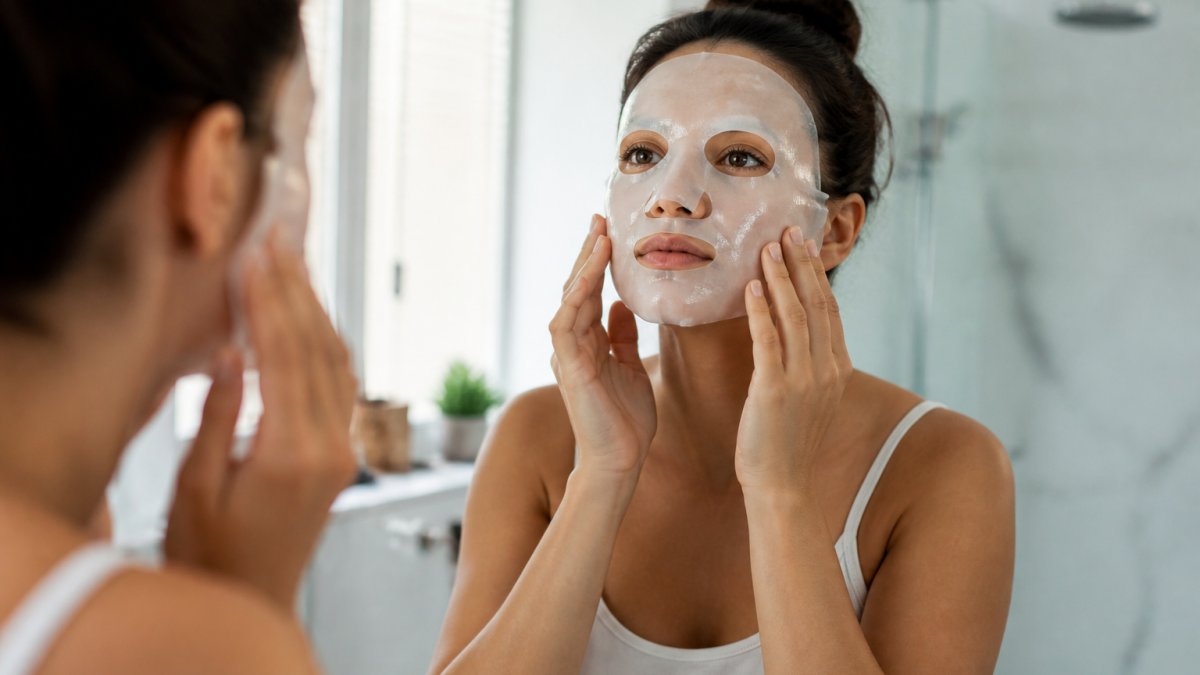
Apply an even layer using the included applicator or a clean brush, working from the center of your face outward. Cover your forehead, cheeks, nose, and chin, but avoid the eye area, eyebrows, hairline, and lips, these zones are too sensitive for mask formulas.
Leave the mask on for the duration specified on the package. Hydrogel masks typically work best for 20 minutes to 3 hours, depending on your skin type and the specific product. Peel-off masks like the Beautivana PDRN Collagen Peptide Night Wrapping Mask can stay on overnight as your final skincare step. The longer contact time allows deeper ingredient absorption, but there's a point of diminishing returns, leaving a hydrogel mask on for six hours doesn't deliver twice the benefit of three hours.

Remove the mask gently. For hydrogel masks, peel slowly from the edges and discard. For peel-off masks, start at one corner and peel away the entire film. Don't rush this step; rough removal can irritate your skin.
The biggest mistake is applying a mask to damp skin. Water on your face creates a barrier that prevents the mask from adhering and reduces ingredient penetration. Your skin needs to be completely dry. This is non-negotiable.
Another frequent error is skipping the prep step. Applying a collagen mask over makeup residue or dead skin cells wastes the treatment's potential. A quick cleanse takes 90 seconds and dramatically improves results.
Overusing masks is tempting but counterproductive. Using a collagen mask every day can over-hydrate your skin and disrupt your barrier function, leading to sensitivity or breakouts.
Don't ignore the eye area rule. The skin around your eyes is thinner and more reactive. Collagen mask formulas can cause irritation, redness, or puffiness if they contact this zone.
Finally, avoid leaving a hydrogel mask on indefinitely hoping for better results. Once the mask becomes fully transparent and stops releasing moisture, it's done working.
Beautivana PDRN Collagen Peptide Night Wrapping Mask – 1.69 fl oz →
The ideal duration depends on the mask type. Hydrogel collagen masks typically work best between 20 minutes and 3 hours. Most people see optimal results in the 45-minute to 2-hour window. This timeframe allows full ingredient absorption without over-hydrating or drying your skin out afterward.
Peel-off collagen masks, including overnight formulas, have different timing. The Beautivana PDRN Collagen Peptide Night Wrapping Mask is designed to stay on overnight, 8 to 12 hours, as your final skincare step. This extended contact allows the peptides and PDRN to work while you sleep, and you wake to noticeably softer, plumper skin.
Watch for transparency as your signal. Hydrogel masks gradually become more transparent as they release their essence into your skin. Once the gel is nearly clear, it's finished its work. Remove it at that point rather than waiting for the full recommended time if the mask has already become transparent.
If you're new to collagen masks, start with the minimum recommended time (usually 20-30 minutes) and gradually increase duration as your skin adjusts. This helps you gauge how your individual skin responds and prevents over-treatment.
Korean bio collagen masks stand apart because of their formulation sophistication and delivery technology. Korean beauty brands invest heavily in hydrogel and peel-off innovations that maximize ingredient contact and absorption. The result is faster, more visible results compared to standard sheet masks.
The hydration benefit is immediate and substantial. Korean collagen masks use hydrolyzed collagen, broken down into smaller peptide chains, that can penetrate the stratum corneum and plump the skin from within.
Texture improvement follows consistent use. Fine lines appear softer because hydrated skin reflects light differently than dehydrated skin. The peptides in Korean collagen masks signal your skin cells to maintain collagen production, which means the texture improvements can become semi-permanent with regular application.
Firmness and elasticity gains are real but gradual. The niacinamide, peptides, and supporting ingredients in Korean collagen masks strengthen your skin barrier and support collagen synthesis.
Brightening and radiance are secondary benefits. Hydrated skin naturally looks brighter because light reflects more evenly off a plump, moisturized surface. The snail mucin and kojic acid found in many Korean formulas add gentle brightening effects. Beautivana's Snail Mucin, Collagen & Kojic Acid Hydrogel Mask combines these benefits in a single treatment.

Dry, Dehydrated Skin: This is where collagen masks excel. If your skin feels tight, flaky, or uncomfortable, a weekly collagen mask addresses the root issue, lack of moisture. Hydrogel masks work best for this concern because they deliver sustained hydration over hours. The Beautivana Bio-Collagen Hydrogel Mask for Neck & Chest is particularly effective for dehydrated areas.

Fine Lines and Wrinkles: Hydration is the first line of defense against fine lines. Plump, moisturized skin minimizes the appearance of creases.
Dull, Tired-Looking Skin: Dehydration is the primary cause of dullness. A collagen mask restores moisture and radiance within a single application. The brightening ingredients in Korean formulas amplify this effect.
Uneven Texture: If your skin feels rough or has visible texture irregularities, collagen masks smooth the surface by hydrating and plumping. The peptides support a more even skin tone over time.
Beautivana PDRN Collagen Peptide Night Wrapping Mask – 1.69 fl oz →
Sensitive or Compromised Barrier: Collagen masks strengthen your skin barrier by delivering hydration and barrier-supporting ingredients. If your skin is reactive or irritated, a gentle collagen mask can help restore function.
Mature Skin: This is the sweet spot for collagen masks. Mature skin loses moisture, collagen, and elasticity naturally. Weekly collagen mask use addresses all three concerns.
Consistency trumps frequency. Using a collagen mask once weekly produces better results than sporadic use, even if sporadic use involves higher concentrations or longer durations.
For most skin types, once weekly is the sweet spot. This frequency allows your skin to benefit from the treatment without disrupting your barrier or causing sensitivity.
If your skin is very dry or mature, twice weekly is acceptable, but only if your skin tolerates it without irritation. Watch for signs of over-hydration: puffiness, sensitivity, or breakouts.
If your skin is oily or acne-prone, once weekly is sufficient, and you may want to use masks only biweekly.
Don't expect overnight transformation. Results compound over time. After one application, your skin looks and feels better for a few days.
The best practice is to use a collagen mask as part of a complete routine.
| Usage Frequency | Best For | Expected Timeline |
|---|---|---|
| Once weekly | Most skin types, maintenance | Visible results in 3-4 weeks |
| Twice weekly | Very dry or mature skin | Results visible in 2-3 weeks |
| Biweekly | Oily or acne-prone skin | Results visible in 6-8 weeks |
| Before events | Special occasions | Immediate radiance boost |
Collagen masks for skin are one of the most effective at-home treatments for hydration, texture, and firmness.
Collagen molecules in topical masks are too large to penetrate deeply into the skin. Instead, collagen masks work by forming a hydrating film on the surface that locks in moisture and helps skin feel softer and more supple. The real benefit comes from the mask's other ingredients, peptides, PDRN, niacinamide, and humectants, that support hydration and skin texture. Korean bio collagen masks are designed to maximize this surface hydration effect, leaving skin looking plumper and more refreshed.
Most people see the best results using collagen masks 1-3 times per week as part of their skincare routine. Overnight wrapping masks like the Beautivana PDRN Collagen Peptide Night Wrapping Mask can be used 2-3 times weekly, while hydrogel masks work well as a weekly intensive treatment. Consistency matters more than frequency; regular use over 4-6 weeks allows your skin to build hydration levels and show visible improvements in texture and firmness. Listen to your skin, if it feels irritated, reduce frequency.
Korean collagen masks often include advanced ingredients like PDRN (Salmon DNA), peptides, snail mucin, and caviar extract that go beyond basic collagen. These multi-ingredient formulas target hydration, elasticity, and skin texture more comprehensively than simpler masks. Korean beauty formulations are also designed for longer wear times and intensive hydration, making them particularly effective for mature or dry skin. However, effectiveness depends on your skin type and concerns, what works best varies by individual.
Collagen masks can improve the appearance of fine lines by deeply hydrating the skin, which plumps the skin temporarily and makes lines less visible. The peptides and PDRN in quality masks like the Beautivana Caviar PDRN Rejuvenating Collagen Mask support skin elasticity and firmness over time. For deeper wrinkles, results are modest, masks work best as part of a complete routine that includes serums, retinol, and sun protection. Regular use can improve skin texture and tone, making fine lines appear softer.