

Last Updated: September 3, 2026
The difference between Korean skincare and Western serums for hydration isn't just about geography, it's about philosophy. At Beautivana, we've studied how these two approaches diverge fundamentally in their treatment of skin moisture, and the results reveal why so many people find success combining both rather than choosing one exclusively.
Korean skincare treats hydration as a foundational layer that supports everything else. Western serums, by contrast, typically target specific concerns with concentrated active ingredients. One focuses on building moisture barriers; the other focuses on delivering targeted benefits. Understanding this distinction helps you decide which approach, or which blend of both, will actually work for your skin.
The choice between Korean skincare and Western serums for hydration often comes down to your skin's specific needs and how much time you're willing to invest in your routine. A person with dehydrated, reactive skin might find Korean layering techniques transformative. Someone dealing with stubborn hyperpigmentation or fine lines might need the concentrated actives that Western serums deliver. Many people find the answer isn't either-or; it's both.
Korean skincare views hydration not as a single step but as a multi-layered process that saturates skin with moisture at every stage. This philosophy emerged from climate and cultural preferences in Korea, where dry winters and the desire for dewy, glass-skin aesthetics drove innovation in hydrating formulations.
The Korean approach uses multiple lightweight layers, essences, toners, serums, and sheet masks, each delivering hydration in slightly different ways. Rather than one heavy moisturizer, you're building hydration with several thinner applications. This allows each product to absorb fully before the next layer goes on, maximizing penetration without leaving skin feeling greasy or heavy.
Ingredients like snail mucin, hyaluronic acid, niacinamide, and fermented extracts are staples in Korean hydrating products (peer-reviewed research). These ingredients work synergistically to draw moisture into the skin and lock it there. A product like Beautivana Snail Mucin 92% Moisturizer exemplifies this philosophy, formulated with 92% snail secretion filtrate, it delivers deep hydration without the heaviness of traditional creams.

The Korean skincare philosophy also emphasizes prevention over correction. By maintaining optimal hydration levels consistently, you're preventing many skin concerns before they start. Dehydrated skin is more prone to sensitivity, breakouts, and accelerated aging (the American Academy of Dermatology). Well-hydrated skin is resilient, plump, and naturally radiant.
:::pro tip Korean skincare routines often involve 5-10 steps, but you don't need to do all of them daily. Most people benefit from a simplified version: cleanser, toner, essence or serum, moisturizer, and sunscreen in the morning. Evening routines can be more elaborate if you have time. :::
Western serums take a different approach entirely. Rather than building hydration through multiple layers, Western serums are engineered to deliver high concentrations of active ingredients, vitamin C, retinol, niacinamide, peptides, designed to address specific skin concerns in a single, potent formula.
The Western philosophy assumes that more active ingredient in a smaller volume is more efficient. A serum is typically lightweight, fast-absorbing, and meant to be used as one step in a simplified routine. The goal is visible results for a specific problem: brightening, anti-aging, pore refinement, or hydration with added benefits.
Western serums for hydration often combine hyaluronic acid with other actives like niacinamide or vitamin E to deliver moisture while also addressing secondary concerns. The Beautivana Milky Ceramide Face Serum bridges both philosophies, it's a hydrating serum with ceramides, hyaluronic acid, and vitamin E that delivers moisture while supporting skin barrier health.

The Western approach appeals to busy professionals and people who prefer minimal routines. Instead of 8 steps, you get cleanser, serum, moisturizer, and sunscreen. The serum does the heavy lifting for your specific concern. This efficiency is why Western serums dominate the market in North America and Europe.
However, the Western approach can sometimes miss the cumulative benefit of layered hydration. A single serum, no matter how well-formulated, may not provide the same depth of hydration as multiple lighter layers. For people with very dry or dehydrated skin, a Western-only routine might feel insufficient.
For people in Atlanta and across the country dealing with dry skin, the best hydrating serums combine proven efficacy with ingredients that match your skin's actual needs. Korean serums excel at delivering pure hydration; Western serums excel at hydration plus targeted benefits.
Korean hydrating serums typically feature fermented ingredients, botanical extracts, and humectants that draw moisture deep into the skin. The Beautivana Propolis Light Hydrating Ampoule is formulated with 83.3% propolis extract, hyaluronic acid, and panthenol, a powerhouse combination for dry skin. Propolis is rich in antioxidants and has been used in Korean skincare for decades specifically because of its hydrating and soothing properties.
Another strong option is the Beautivana Rice + Alpha Arbutin Hydrating Serum, which features rice bran water for gentle hydration paired with alpha arbutin for brightening. This serum works well for dry skin that's also dealing with uneven tone or dullness.
Western hydrating serums typically prioritize hyaluronic acid in high concentrations, often paired with glycerin or other humectants. The Beautivana Cactus Hydrating Facial Serum bridges the gap between both philosophies, it's lightweight like a Western serum but formulated with cactus and ceramides for the multi-benefit hydration approach that Korean skincare champions. The addition of LHA and PHA provides gentle exfoliation without compromising hydration.

For people with severely dry skin, layering a Korean hydrating serum under a Western serum often delivers better results than either alone. The Korean serum saturates skin with moisture; the Western serum locks it in and adds targeted benefits.
Layering serums for maximum hydration requires understanding texture, molecular weight, and absorption rates. The fundamental rule: apply products from lightest to heaviest texture, allowing each to absorb before applying the next.
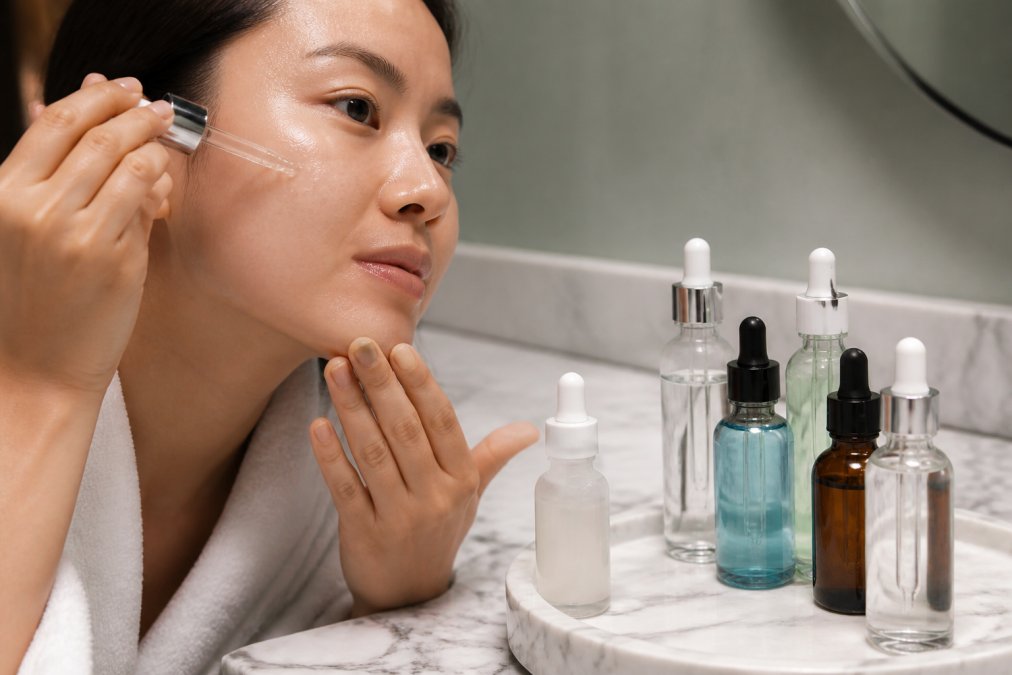
Start with a hydrating toner or essence if you're following the Korean approach. These are the lightest products and prepare skin to receive subsequent layers. After cleansing and toning, apply your first serum, typically a Korean hydrating serum like the Beautivana Propolis Light Hydrating Ampoule. Use 2-3 drops, gently pressing into the skin until fully absorbed. This usually takes 30-60 seconds.
Once the first serum is absorbed, apply your second serum if you're using one. If it's a Western serum with actives, this step adds targeted benefits on top of your hydration foundation. Use the same 2-3 drops and allow full absorption. The key is patience, rushing this step means products don't absorb properly and can sit on the skin surface, feeling sticky or heavy.
After serums are fully absorbed, apply your moisturizer. This is the crucial step that locks in all the hydration you've just layered. A lightweight moisturizer works best if you've already applied multiple serums; a heavier cream is appropriate if you've done minimal layering.
Finish with sunscreen during the day. At night, you can add a sleeping mask or richer night cream as the final step.
Yes, you absolutely can mix Korean and Western skincare products, and many people find this combination delivers better results than committing exclusively to one philosophy. The key is understanding how they work together rather than against each other.
Korean products are designed to layer without conflict. Multiple light layers of hydration don't interfere with each other; they complement each other. Western products are designed to work as standalone steps. When you combine them, you're essentially using Korean layering as your hydration foundation and Western serums as your active treatment layer.
A practical combination for dry skin might look like: cleanser → toner → Beautivana Cactus Hydrating Facial Serum → Western vitamin C serum → Beautivana Snail Mucin 92% Moisturizer → sunscreen.
The Beautivana Milky Ceramide Face Serum works particularly well in mixed routines because it bridges both philosophies, it's hydrating like a Korean serum but concentrated like a Western serum, making it compatible with both approaches.
One caution: avoid layering multiple actives from Western serums in a single routine unless you have very resilient skin. A vitamin C serum plus a retinol serum plus a niacinamide serum in one step is likely to cause irritation. Instead, use one active per routine (morning or evening), and build hydration with Korean products around it.
The best approach depends on your skin type, primary concerns, and lifestyle. If you have very dry, dehydrated, or sensitive skin, Korean skincare's multi-layered hydration approach is likely to feel transformative. The emphasis on prevention and moisture-first thinking aligns with what dry skin actually needs.
If you have specific concerns like hyperpigmentation, fine lines, or active breakouts alongside dehydration, Western serums with targeted actives may be more efficient. You get hydration plus treatment in fewer steps.
If you're traveling frequently or prefer minimal routines, Western serums offer speed and simplicity. A single serum plus moisturizer takes 30 seconds. If you have time and enjoy skincare rituals, Korean layering offers a meditative, spa-like experience that many people find genuinely enjoyable.
For most people in Atlanta and beyond dealing with aging, dry skin, and multiple concerns, a hybrid approach works best. Use Korean hydrating serums as your foundation, they're forgiving, hard to overuse, and deliver visible plumping and softness. Layer Western serums with actives on top for specific concerns. This combination gives you the best of both philosophies without the overwhelm of a 10-step routine.
Your skin will tell you what it needs. If it feels dehydrated despite using a Western-only routine, add a Korean hydrating serum. If it feels heavy or isn't improving despite a full Korean routine, introduce a Western serum with targeted actives. Listen to what your skin is actually telling you, not what any single philosophy insists is correct.
The choice between Korean skincare and Western serums for hydration isn't really a choice at all, it's an opportunity to combine two effective approaches into something better than either alone. Beautivana's curated collection of Korean hydrating serums, including the Propolis Light Hydrating Ampoule, the Cactus Hydrating Facial Serum, and the Milky Ceramide Face Serum, gives you the foundation for visible, lasting hydration. Shop all best sellers and discover the hydration approach that transforms your skin.
| Approach | Philosophy | Best For | Routine Time | Key Ingredients |
|---|---|---|---|---|
| Korean Skincare | Hydration as foundation; multiple light layers | Dry, dehydrated, sensitive skin | 5-10 minutes | Snail mucin, fermented extracts, hyaluronic acid |
| Western Serums | Targeted actives in concentrated formulas | Specific concerns (aging, tone, texture) | 2-3 minutes | Vitamin C, retinol, niacinamide, peptides |
| Hybrid Approach | Korean hydration + Western actives | Multiple concerns + dry skin | 5-7 minutes | Both categories layered strategically |
Korean skincare prioritizes layering multiple lightweight products to build hydration gradually, using ingredients like snail mucin, propolis, and rice bran. Western serums typically deliver concentrated active ingredients in single formulas designed for specific concerns. Korean products focus on preparation and moisture, while Western serums emphasize targeted results. Both approaches work; the choice depends on whether you prefer a multi-step ritual or a streamlined routine.
Both can be effective for dry skin, but they work differently. Korean serums like the Beautivana Snail Mucin 92% Moisturizer provide deep hydration through layering and humectant-rich formulas. Western serums often include stronger actives like hyaluronic acid or ceramides in higher concentrations. For persistent dryness, many people see better results combining both approaches: use a Korean serum base for hydration, then add a Western serum with barrier-repairing ceramides or targeted actives.
Most people notice improved skin texture and plumpness within 1-2 weeks of consistent use. Deeper hydration benefits and visible reduction in fine lines typically appear after 4-6 weeks. Results depend on your starting skin condition, how well you layer products, and whether you're using serums correctly, always apply to damp skin and seal with moisturizer. Consistency matters more than the specific product; switching routines frequently prevents you from seeing real results.
Yes, but start slowly. Korean products are often gentler and more hydration-focused than Western serums, making them suitable for sensitive skin. However, introduce one new product at a time and patch test first. Ingredients like snail mucin and propolis in Beautivana formulas are generally well-tolerated. If you have reactive skin, avoid combining too many actives at once. The layering approach in Korean skincare actually works well for sensitive skin because each step is lighter and less irritating.
This article was written using GrandRanker