

Last Updated: September 10, 2026
Learning how to use an LED face mask correctly starts with one simple truth: consistency and proper technique matter more than the device itself. This guide from Beautivana walks you through every step, from choosing the right mask to building a routine that fits your life.
LED face masks are wearable devices that emit specific wavelengths of light to support skin appearance. Understanding how they work helps you get better results and avoid wasting money on a trend that never delivers.
Most people who see disappointing results made one of three mistakes: skipping prep, choosing the wrong light mode, or quitting before the routine had time to work. Below, we'll show you exactly how to avoid all three.
The right LED face mask matches your primary skin concern, your schedule, and your comfort needs. A mask that's awkward to wear won't get used, no matter how good the technology is.
For most people starting out, a multi-mode mask offers the best value because it covers several concerns in one device. Wireless designs suit frequent travelers and anyone who wants to move around during a session.
If you're unsure where to begin, a 7-color mask gives you options without committing to a single light mode. For a more complete routine, a system that pairs the mask with hydrating skincare removes the guesswork entirely.

Using an LED face mask at home takes about 20 minutes from start to finish. The process is simple: cleanse, position the mask, select your mode, run your session, then follow with skincare.
Here's the full routine, broken into three stages you can repeat several times a week.
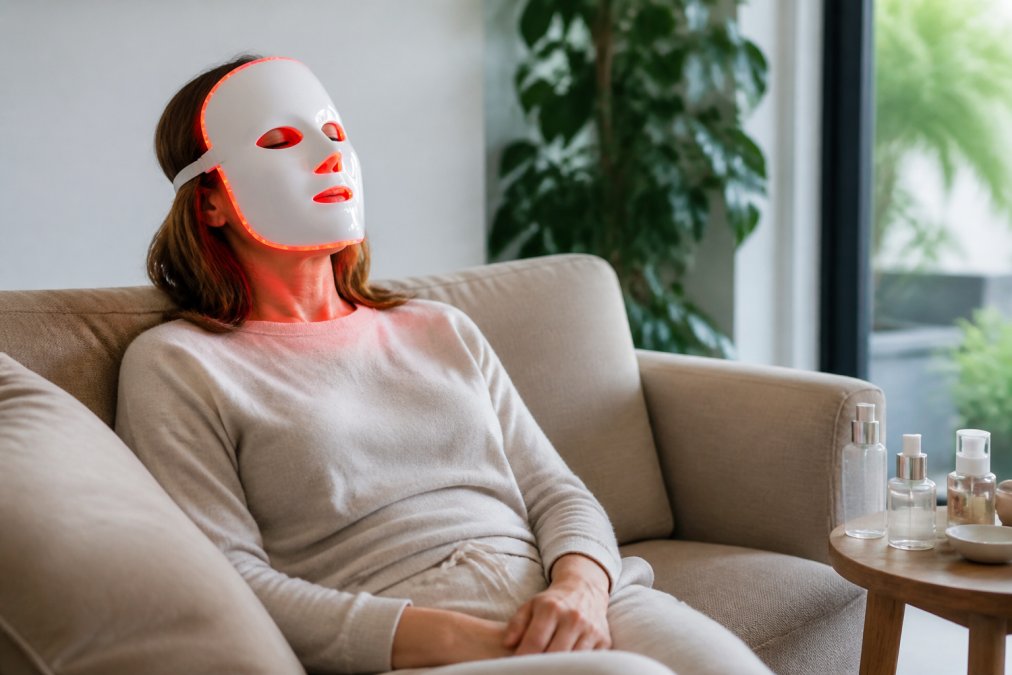
Start with a clean, dry face. Remove makeup, sunscreen, and oil with a gentle cleanser, then pat dry.
A common mistake is applying a thick cream before your session. Heavy products can block light from reaching the skin, which defeats the purpose (PubMed). If you want a conductive layer, use a lightweight serum instead.
Place the mask so the lights sit close to your skin without pressing hard. Adjust the strap for a snug but comfortable fit, then choose your mode.
Follow the instructions included with your device for session length. Don't guess.
Remove the mask, then apply your serum and moisturizer as usual. This locks in hydration and supports the work you just did.
Clean the mask according to the manufacturer's instructions before storing it. A quick wipe-down keeps it hygienic and ready for next time.
Most LED face mask sessions run between 10 and 20 minutes, depending on the device and the light mode you select (the American Academy of Dermatology). Longer isn't better. Exceeding the recommended time can irritate your skin rather than help it (peer-reviewed research).
The right duration depends on your device's instructions and how your skin responds. Start with the shorter end of the range for your first few sessions, then adjust.
| Session Goal | Typical Duration | Frequency |
|---|---|---|
| Getting started | 10 minutes | 2-3 times per week |
| Building a routine | 15 minutes | 3-4 times per week |
| Maintaining results | 15-20 minutes | 4-5 times per week |
Consistency beats intensity. A short session four times a week will do more than a single long session once a week.
The best skincare products to use with an LED mask are lightweight, hydrating, and free of heavy occlusives that block light. Serums and essences work well before a session; richer creams belong after.
Pairing your mask with the right products supports the routine and keeps your skin comfortable. A few categories do most of the work:
Beautivana's LED Hydration Facial System Kit bundles a 7-color LED mask with a Cica Collagen Hydrating Facial Serum, a Rice & Honey Hydrating Face Mask, a White Truffle Hydrating Facial Mist, and an Ice Roller Facial Massage Tool. It's a straightforward way to start without researching every product separately.
For anyone focused on collagen and hydration, the Beautivana LED PDRN Facial Kit pairs a 7-color LED mask with PDRN Pink skincare, including toner pads, a peptide serum, a gel mask, and a moisturizer.
Applying a thick, occlusive cream before your LED session is one of the most common mistakes. It blocks light from reaching your skin, so you get the relaxation without the benefit. Save heavy creams for after.
LED mask safety comes down to a few non-negotiable rules: protect your eyes, follow the timer, and stop if your skin reacts. These devices are designed for external cosmetic use, and they work best when you respect the instructions.
If you have a diagnosed skin condition or take medication that increases light sensitivity, talk to a doctor before starting. This is general guidance, not medical advice.
Clean your device regularly and store it away from direct sunlight. A well-maintained mask lasts longer and stays hygienic.
The biggest mistake people make with an LED face mask is quitting too soon. Results build gradually with consistent use, not after a single session.
Other common errors are easier to fix:
A common mistake is treating the mask as a one-time fix rather than a routine step. Think of it the way you'd think of any consistent habit: the value comes from repetition.
If you're in Atlanta and want to build a routine that actually sticks, start with a device that's comfortable enough to wear while you relax. Beautivana's 3D Wireless LED Facial Mask is designed for exactly that, with a wireless, wearable fit and multi-color light modes.

Building an LED mask routine isn't complicated, but it does require the right device and a little patience. Beautivana offers spa-inspired Korean skincare and advanced beauty devices designed for exactly this kind of at-home self-care, including the 7-Color LED Facial Beauty Mask and the 3D Wireless LED Facial Mask, both built to make a consistent routine easy to keep. If you're ready to firm, smooth, and restore your skin's natural radiance, explore the collection and find the device that fits your goals.
Shop All Best Sellers
Most at-home LED face masks are designed for use three to five times per week. Start with three sessions per week for the first two weeks so your skin adjusts, then increase if your skin tolerates it well. Daily use is generally not necessary and may cause sensitivity in some people. Follow the instructions included with your specific device, since session frequency varies by model and light intensity.
Yes, and pairing the right serum can improve your results. Apply a hydrating serum with ingredients like collagen, peptides, or hyaluronic acid before your session so the light works alongside your skincare. Avoid products with photosensitizing ingredients such as retinol or strong acids right before LED use. The Beautivana LED PDRN Facial Kit includes a peptide serum designed for this exact routine.
Visible changes typically appear after four to six weeks of consistent use, with more noticeable firming and glow after eight to twelve weeks. Results depend on your skin, the light modes you use, and how regularly you stick to your routine. Take a photo in the same lighting every two weeks so you can track subtle changes that are easy to miss in a mirror.
LED face masks are generally well tolerated for at-home use. Some people experience mild redness or warmth right after a session, which usually fades within an hour. Skip use on broken skin, active cold sores, or areas with recent chemical peels. If you take medications that cause photosensitivity, check with your dermatologist before starting LED light therapy.