

Last Updated: July 18, 2026
The 10-step Korean skincare routine is a layered approach built on patience, hydration, and skin barrier health. Rather than aggressive treatments, K-beauty uses consistent, science-backed steps that transform skin through intentional sequencing. Each step serves a specific purpose, from cleansing through protection, allowing precise application of actives where they matter most.
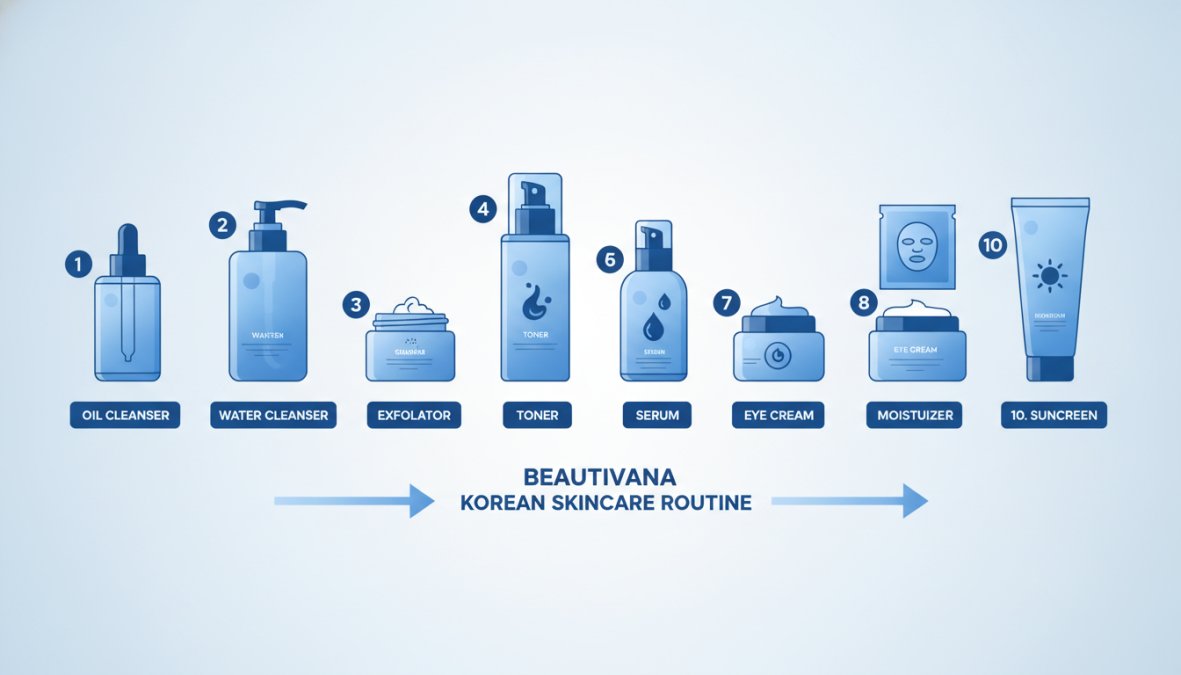
Korean skincare emphasizes prevention and maintenance over correction. Layering works because each product has a specific molecular weight and purpose. A lightweight essence penetrates deeper than a heavy moisturizer, so applying essence first, then serum, then moisturizer creates optimal absorption. This is basic chemistry: skin prep through toning and essence creates an ideal pH environment for active ingredients to work effectively.
The glass skin aesthetic isn't about aggressive exfoliation but meticulous hydration and barrier repair. Research from the Journal of Cosmetic Dermatology confirms that consistent hydration increases skin elasticity and reduces fine lines more effectively than many anti-aging treatments.
Following steps in sequence matters more than specific brands. Each step builds on the previous one, creating a synergistic effect.
Begin with an oil-based cleanser to dissolve makeup, sunscreen, and oil-soluble impurities. Oil dissolves oil, breaking down sebum and lipophilic substances without stripping skin. Most oil-based cleansers emulsify when you add water, transforming into a milky consistency that rinses clean.
Apply to dry skin and massage gently for 30-60 seconds. Don't skip this step even without makeup; environmental pollutants and sebum buildup require oil-based cleansing.
The water-based cleanser removes remaining residue and water-soluble impurities like sweat and salt. Look for gentle formulations with pH between 5.5 and 6.5 to avoid disrupting your skin barrier. Cleansers with hydrating ingredients like glycerin or hyaluronic acid prevent the tight, squeaky-clean feeling that indicates over-stripping.
Massage into damp skin for about one minute, then rinse with lukewarm water. Pat skin dry gently; aggressive rubbing can irritate the skin barrier.
Exfoliation removes dead skin cells, allowing subsequent products to penetrate more effectively. Korean skincare uses chemical exfoliants rather than physical scrubs. Chemical exfoliants using acids (AHAs like glycolic acid) or enzymes dissolve bonds between dead skin cells more gently than mechanical scrubbing.
Use exfoliants 2-3 times per week, not daily. Over-exfoliation causes redness, sensitivity, and barrier damage. Apply to clean, dry skin and leave on for 5-10 minutes. If you have sensitive skin, start weekly and gradually increase frequency.
K-beauty toners are hydrating treatments that restore pH balance after cleansing and prepare skin to absorb subsequent treatments. They're lightweight and water-based, designed for quick absorption without residue.
Apply by gently patting into skin with your hands or a cotton pad. Some people layer multiple toners to build hydration, particularly beneficial for dry or dehydrated skin. Look for toners containing hyaluronic acid, glycerin, or niacinamide to support skin barrier function.
Essence is lighter than a serum but more concentrated than a toner, delivering hydration and active ingredients deep into skin. Essences contain fermented ingredients, peptides, or botanical extracts that support skin renewal.
Apply by patting gently into skin with your fingertips. Essence works best on damp skin because it helps lock in moisture. It bridges the gap between hydration and treatment, preparing skin to receive targeted serums.
Serums and ampoules deliver concentrated active ingredients to address specific concerns: brightening, anti-aging, or acne treatment. Ampoules are more potent and typically used for shorter periods, while serums are gentler for daily use.
Apply 2-3 drops to damp skin, gently pressing rather than rubbing. Common actives include vitamin C for brightening, niacinamide for pore refinement, and hyaluronic acid for hydration. You can layer two serums if addressing multiple concerns; apply the thinner one first.
Sheet masks deliver concentrated serums directly to skin for 15-20 minutes, allowing deeper penetration than wash-off masks. Use 1-3 times weekly depending on skin type and concerns. Apply after serum but before eye cream and moisturizer. After removing, gently pat remaining serum into skin rather than wiping away.
The skin around your eyes is thinner and more delicate, requiring dedicated care. Eye cream addresses concerns specific to this area: dark circles, puffiness, fine lines, and crepiness.
Apply using your ring finger in a gentle tapping motion around the orbital bone. Use a pea-sized dot per eye. Avoid applying directly on the eyelid where product can migrate into the eye. Even young skin benefits from eye cream because this area shows aging signs earliest.
Moisturizer seals all previous products into your skin and creates a protective barrier. Choose formulations appropriate for your skin type: lightweight gel for oily skin, richer cream for dry skin, or balanced lotion for combination skin.
Apply to damp skin to enhance absorption. Use upward strokes on face and neck, avoiding the eye area. A good moisturizer contains ceramides, which repair the skin barrier and prevent water loss.
During the day, finish with broad-spectrum SPF 30 or higher. Sunscreen is non-negotiable because UV damage causes premature aging, dark spots, and skin cancer risk. At night, skip sunscreen and use a night cream if desired. Night creams are richer because you don't need to wear makeup over them.
Understanding ingredient function helps you choose products strategically rather than buying everything recommended.
Hyaluronic acid holds up to 1000 times its weight in water, plumping skin and reducing fine line appearance. Apply to damp skin for maximum effectiveness.
Ceramides form your skin barrier, preventing water loss and protecting against environmental stressors. They're essential for anyone with dry, sensitive, or compromised skin.
Niacinamide (vitamin B3) regulates sebum production, minimizes pores, and strengthens the skin barrier. It's suitable for all skin types and works well with other actives.
Peptides signal your skin to produce collagen, improving firmness and reducing fine lines. They require consistent use over weeks for results.
Fermented ingredients are prevalent in K-beauty because fermentation breaks down plant compounds into smaller molecules that penetrate more effectively. These ingredients also support your skin's microbiome.
Vitamin C brightens skin, fades dark spots, and provides antioxidant protection. Look for stabilized forms like L-ascorbic acid. Store in dark bottles away from light and heat.
You don't need all 10 steps to see results. A simplified version still delivers significant benefits.
Minimal 3-step routine: cleanser, moisturizer, sunscreen. This covers the basics and addresses 80% of skincare needs.
Essential 5-step routine: oil cleanser, water cleanser, toner, serum, moisturizer. This adds targeted treatment and pH balancing, where most people see noticeable improvement.
Full 10-step routine: adds essence, sheet mask, eye cream, exfoliator, and SPF/night care for maximum results.
Start with a minimal routine and add steps gradually as you understand your skin's needs. This prevents overwhelming your skin barrier and helps you identify which products actually work for you. Many people discover they don't need all 10 steps.
The 10-step routine is a framework, not a prescription. Your skin type and concerns should guide which products you choose.
Oily skin benefits from lightweight formulations and oil-control ingredients. Use a gel cleanser as your water-based second cleanse. Choose essences and serums over heavy oils. Look for niacinamide to regulate sebum and salicylic acid to prevent congestion. Your moisturizer should be lightweight lotion or gel.
Dry skin requires emphasis on hydration and barrier repair. Use a creamy oil cleanser and gentle cream cleanser. Layer multiple hydrating products: toner, essence, and serum. Choose moisturizers with ceramides and peptides. Use sheet masks 2-3 times weekly. Consider adding a richer night cream or sleeping pack.
Combination skin typically has an oily T-zone and dry cheeks. Apply different products to different zones, lightweight formulations on oily areas, richer products on dry areas. Many people with combination skin need two moisturizers.
Sensitive skin requires gentle, minimal ingredients. Skip the exfoliator or use it only once monthly. Choose calming essences with centella asiatica or chamomile. Avoid active ingredients like vitamin C or acids until your barrier is healed. Focus on barrier repair with ceramides and peptides.
Mature skin benefits from anti-aging actives combined with intense hydration. Layer hydrating products to address loss of elasticity. Use serums with peptides, retinol, or vitamin C for firmness. Eye cream is non-negotiable. Consider adding a richer night cream with retinol or peptides.
Glass skin, a smooth, luminous, poreless-looking complexion, results from optimal hydration, barrier health, and even skin tone. It takes 6-12 weeks of consistent routine to achieve.
The glass skin routine emphasizes hydration and exfoliation balance. You need enough exfoliation to remove dead skin cells that cause dullness, but not so much that you damage your barrier. Key to glass skin is using hydrating sheet masks 2-3 times weekly and incorporating a vitamin C serum for brightness. Consistency matters more than product cost; drugstore products used daily outperform luxury products used sporadically. Most people see initial improvements within 2-3 weeks, with full glass skin results after 8-12 weeks.
The 10-step routine doesn't require expensive products. Many effective K-beauty items cost under $10, and drugstore brands often perform as well as luxury alternatives.
Consolidate steps: Use a hydrating toner that doubles as essence. Choose a serum with multiple benefits rather than buying separate products. This reduces product count without sacrificing results.
Shop by ingredient, not brand: Hyaluronic acid from a $5 essence performs identically to hyaluronic acid from a $50 serum. Focus on ingredient lists rather than packaging or marketing claims.
Buy from Korean retailers: Websites like YesStyle and StyleKorean offer authentic K-beauty products at lower prices than Western retailers with fast shipping.
Sustainability matters: The 10-step routine generates significant packaging waste. Buy products in larger sizes to reduce packaging per use, choose brands with refillable containers, or consolidate your routine to 5-6 essential steps.
Understanding realistic timelines prevents disappointment and helps you stick with your routine long enough to see results. Skin cells regenerate on a 28-day cycle.
Week 1-2: You'll notice improved hydration and smoother texture. Your skin feels more comfortable and looks slightly brighter.
Week 3-4: Skin tone evens out as exfoliation removes dead cells. Fine lines appear less pronounced due to improved hydration.
Week 5-8: Active ingredients like vitamin C or peptides begin showing results. Pores appear refined. Dark spots fade slightly. Skin texture improves noticeably.
Week 9-12: Cumulative effects become obvious. Skin appears luminous and even-toned. Fine lines soften. Skin barrier feels strong and resilient.
Beyond 12 weeks: Results plateau as your skin reaches its optimal state. Consistency maintains results; stopping the routine causes gradual regression within 4-6 weeks.
Patience is the most underrated skincare ingredient. Many people abandon routines after 2-3 weeks expecting immediate results. The 10-step routine requires commitment, but the results justify the time investment.
The Korean skincare routine represents a fundamental shift in how you approach skin health, from reactive treatment to preventative maintenance. Whether you follow all 10 steps or customize to 5-6, the philosophy of layered hydration and barrier support transforms skin over time. Start your routine today and experience the glass skin transformation that millions of K-beauty practitioners have already discovered.
The 10-step Korean skincare routine follows this sequence: (1) oil-based cleanser, (2) water-based cleanser, (3) exfoliator, (4) toner, (5) essence, (6) serum or ampoule, (7) sheet mask, (8) eye cream, (9) moisturizer, and (10) SPF during the day or night cream at night. This order is designed to maximize product absorption and efficacy. Each layer builds on the previous one, with lighter textures applied first and heavier moisturizers last to seal in hydration.
No, the full 10-step routine is not mandatory daily. Many people practice a simplified 4-6 step routine for maintenance and reserve the full routine for evening or weekly treatments. Korean skincare philosophy prioritizes customization based on skin needs, season, and lifestyle. Beginners can start with essentials like double cleansing, toner, serum, and moisturizer, then add steps gradually as their skin adapts and improves.
Absolutely. Customization is central to K-beauty philosophy. For oily skin, use lightweight essences and skip heavy creams; focus on sebum control with niacinamide serums. For dry skin, layer hydrating products like hyaluronic acid serums and rich moisturizers. Sensitive skin benefits from gentle exfoliators and calming ingredients like centella asiatica. Acne-prone skin should emphasize pH-balanced toners and targeted active ingredients while maintaining the skin barrier with ceramides and proper hydration.
Visible results typically appear within 4-8 weeks of consistent use, though skin texture and hydration improvements may be noticeable within 2-3 weeks. More significant changes like reduced pore appearance, smoother skin, and improved radiance develop over 8-12 weeks. Results depend on your starting skin condition, product quality, consistency, and skin type. The key is patience and adherence, Korean skincare rewards long-term commitment rather than quick fixes.
This article was written using GrandRanker