

Last Updated: September 16, 2026
A hydrating serum is a lightweight, fast-absorbing skincare product formulated to deliver concentrated moisture-binding ingredients deeper into the skin than a standard cream. Unlike heavy moisturizers that sit on the surface, serums penetrate quickly and support the skin's natural barrier, which is why they're a cornerstone of any routine built around the benefits of using hydrating serums for glowing skin. At Beautivana, the right serum can help transform dull, tight skin into something visibly plumper and more radiant.

Here's the key insight most people miss: glow isn't a pigment problem, it's a hydration problem. When skin lacks water, it reflects light unevenly and looks flat. When it's well-hydrated, light bounces off a smooth, plump surface. That's the entire mechanism behind a healthy glow.
American Academy of Dermatology guidance on skin hydration
The 4 benefits you'll actually notice:
Layer hydrating serums after cleansing and toning but before moisturizer, and always apply to slightly damp skin so the humectants have water to draw in. The order matters more than the products themselves.
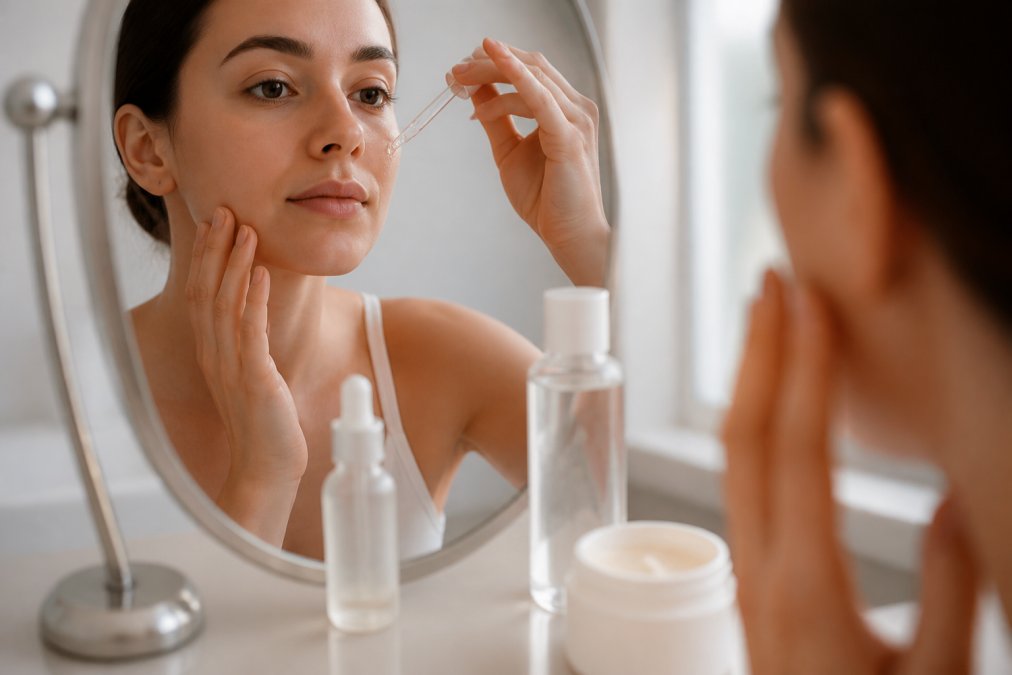
A common mistake is applying serum to bone-dry skin and wondering why it feels tight an hour later. Humectants like hyaluronic acid need ambient moisture to work. Mist or pat on water first.
Thinnest to thickest is the rule that keeps every layer functioning:
Skipping step 5 is where most routines collapse. A serum without a moisturizer on top loses its moisture to the air rather than holding it in your skin.

You can use a hydrating serum twice daily, morning and evening, for most skin types. Hydration-focused formulas are gentle enough for daily use, unlike exfoliating or retinol serums that need a slower introduction.
If your skin is reactive or you're new to a particular formula, start once daily for a week before adding a second application. Those with oily or combination skin often find once daily is plenty, while dry and mature skin usually benefits from both morning and evening use.
The timing trick: apply your serum within 60 seconds of cleansing, while skin is still damp. This single habit does more for results than any product upgrade.
A hydrating serum delivers water-binding ingredients to attract moisture, while a moisturizer seals that moisture in with emollients and occlusives. They solve two different halves of the same problem, which is why using one without the other rarely delivers the glow people expect.
| Product | Primary Job | Key Ingredients | When to Apply |
|---|---|---|---|
| Hydrating serum | Attracts and holds water | Hyaluronic acid, panthenol, glycerin | After toner, on damp skin |
| Moisturizer | Seals moisture in | Ceramides, oils, shea butter | After serum, morning and night |
Think of a serum as pouring water into a glass and a moisturizer as the lid. Without the lid, the water evaporates. Without the water, there's nothing to seal.
For very oily skin in humid summer months, a lightweight gel moisturizer may be enough. For dry or mature skin, especially through a dry Atlanta winter, both steps are non-negotiable.
The ingredients that produce visible glow are humectants, barrier-supporting lipids, and gentle tone-evening actives. Not every "hydrating" serum contains the right combination.
Look for:
What most guides miss is that exfoliating acids like LHA and PHA can appear in hydrating serums too. They smooth texture gently, but they're not for everyone daily. If you're new to them, introduce gradually.
Match the formula to your skin's behavior, not its label. A serum that's perfect for dry, mature skin can feel heavy on oily skin, and vice versa.
Beautivana's lineup covers the main skin profiles:
FDA guidance on cosmetic labeling and ingredient claims

If you're shopping "near me" in Atlanta, Beautivana ships fast across the U.S. and stocks these formulas directly, so you're not gambling on authenticity from a third-party reseller.
A hydrating serum delivers concentrated moisture-binding ingredients, like hyaluronic acid and panthenol, into the skin in a lightweight format. That extra water content helps skin look plumper, softer, and more reflective, which is what reads as glow. Because serums sit close to the skin and layer under moisturizer, they support hydration without the heaviness of a cream. Used consistently, they help with the dry, dull look that makes skin appear tired.
Most people can use a hydrating serum twice daily, morning and evening, after cleansing and toning. If your serum includes exfoliating ingredients like LHA or PHA, start with every other day and build up as your skin adjusts. Dry or mature skin often tolerates twice-daily use well. If you notice stinging or flaking, cut back to once a day and add a richer moisturizer on top.
No. A hydrating serum draws water into the skin, while a moisturizer seals that water in and supports the barrier. Serums are thinner and absorb quickly; moisturizers are thicker and sit on top. Skipping one usually means less glow, because water without a seal evaporates. The practical routine is serum first on slightly damp skin, then moisturizer, then sunscreen in the morning.
Look for humectants and barrier-supporting ingredients: hyaluronic acid, panthenol (vitamin B5), ceramides, and fermented ingredients like lactobacillus ferment. If you also want brightening, alpha arbutin and rice bran water appear in serums aimed at a more even, radiant look. Gentle exfoliants such as LHA and PHA can help smooth texture, but introduce them slowly. Patch test any new serum before applying it to your full face.
The challenge with any hydration routine is consistency, and the right products make consistency easy. Beautivana offers spa-inspired Korean skincare with fast U.S. shipping, including the Hyaluronic Acid 2% + B5 Hydrating Serum, the HA + Collagen Hydrating Serum, and the Cactus Hydrating Facial Serum, each formulated for daily layering. Get started with Beautivana and build a routine that restores your skin's natural glow.