

Last Updated: July 20, 2026
LED facial mask therapy benefits many skin types, utilizing specific wavelengths of light to trigger biological responses through photobiomodulation. This process allows light energy to stimulate natural healing and rejuvenation at the cellular level. Originally, NASA developed LED light therapy for plant growth in space; medical results later proved its remarkable effects on human tissue. Today, dermatologists across the globe recommend LED masks as a non-invasive addition to professional skincare routines.
Photobiomodulation occurs as light energy is absorbed by cellular chromophores, the molecules in the skin that react to specific wavelengths. The different light colors penetrate to varying depths, triggering unique biochemical reactions. For instance, red light (600-700 nanometers) reaches deeper dermal layers, where collagen is located, while blue light (400-500 nanometers) operates more superficially, effectively targeting acne-causing bacteria. Near-infrared light (700-1100 nanometers) penetrates furthest, aiding deep tissue healing.
The importance of wavelength cannot be overstated. FDA-cleared devices specify exact wavelengths and light intensity, measured in milliwatts per square centimeter. Consequently, when evaluating LED masks, focus on these specifications rather than brand marketing. The Beautivana 3D Wireless LED Facial Mask employs a multi-wavelength approach to target acne, aging, and inflammation simultaneously.
Once light reaches skin cells, mitochondria absorb it, specifically cytochrome c oxidase in the mitochondrial membrane. This absorption triggers biochemical reactions that increase the production of ATP (adenosine triphosphate), which serves as the cells' energy currency. More ATP facilitates the operations of fibroblasts, the collagen-producing cells, leading to increased collagen synthesis and enhanced skin firmness and elasticity.
Skin cells operate on a 28-day cycle, and collagen remodeling can take weeks to months. Most users observe visible improvements in skin texture and fine lines after 4-6 weeks of consistent utilization, while more dramatic anti-aging effects typically appear around 8-12 weeks.
One of the prominent led facial mask therapy benefits includes enhancing skin rejuvenation through red light therapy, which targets visible signs of aging such as fine lines, wrinkles, loss of elasticity, and dull complexion. This light penetrates sufficiently deep to reach the dermis, where collagen and elastin reside, making it an excellent option for those concerned with skin firmness and a youthful look. Increased ATP production in fibroblasts leads to more active collagen synthesis. Unlike topical retinoids, which may irritate sensitive skin, red light therapy works gently from within.
Moreover, red light stimulates better circulation to the skin surface. Enhanced blood flow delivers increased oxygen and nutrients, supporting natural healing and rejuvenation, making many individuals notice a healthy glow soon after a red light session—sometimes even before collagen remodeling kicks in.
For those managing sun-damaged skin from years of UV exposure, red light therapy addresses this damage at cellular levels. Regular use can soften fine lines, improve skin texture, and gradually restore a youthful appearance.
Blue light effectively targets acne-causing bacteria, specifically Cutibacterium acnes. This bacterium produces porphyrins that absorb blue light energy, generating reactive oxygen species that damage bacterial cell walls. This non-antibiotic solution reduces bacteria without the side effects usually associated with oral antibiotics or harsh topical treatments.
Additionally, blue light helps reduce sebum production and calm inflammation, addressing multiple acne drivers. Unlike benzoyl peroxide, which can dry and irritate the skin, blue light works without causing chemical irritation, making it suitable for sensitive skin types. Many users report fewer breakouts within 2-3 weeks of consistent use. However, it’s important to note that blue light does not address acne scarring or post-inflammatory hyperpigmentation, where red light's collagen-stimulating effects can be valuable. Many advanced LED masks integrate both wavelengths to leverage their combined benefits.
LED masks provide non-invasive solutions for various skin concerns, making them versatile tools for any skincare routine.
Fine lines and wrinkles often result from decreased collagen and elastin along with accumulated sun damage. Red light therapy effectively addresses both by stimulating fibroblast activity and collagen synthesis, gradually restoring skin firmness and smoothing texture.
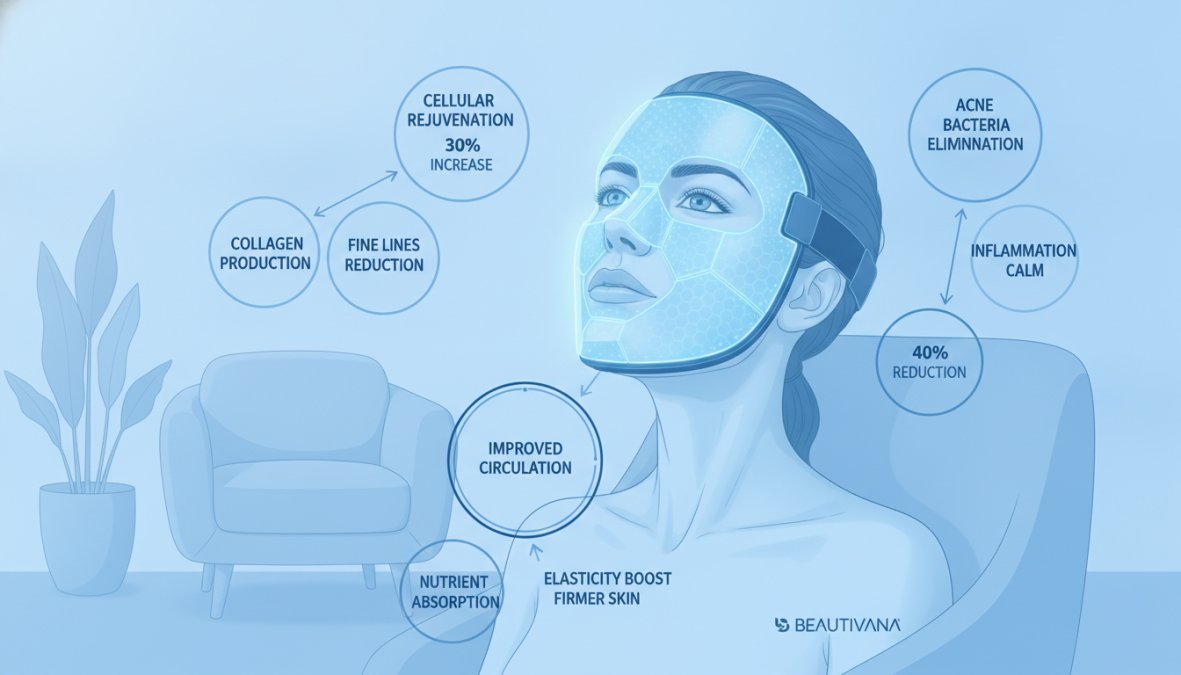
Sun damage presents as hyperpigmentation, rough texture, and accelerated aging. Red light therapy aids in skin barrier repair and boosts cellular turnover, enabling the skin to eliminate damaged cells and replace them with healthier ones. While LED therapy may not erase deep wrinkles acquired over decades, it is highly effective for fine lines and early wrinkles. Dermatologists often recommend initiating LED therapy in your 30s or 40s as a preventative measure.
Skin elasticity hinges on the robustness of collagen and elastin networks within the dermis. LED therapy directly combats aging by stimulating fibroblasts to produce new collagen while supporting the integrity of existing collagen. Improvements in texture are often more apparent than those in deep wrinkle reduction. Within 4-6 weeks of consistent use, most users notice a smoother skin surface, refined pores, and a more uniform complexion.
The Beautivana LED Facial Beauty Device at $235.50 offers advanced features specifically designed to improve texture and elasticity, including adjustable intensity levels that allow for treatment customization based on individual skin sensitivity and goals.
LED light therapy accelerates wound healing by increasing ATP production and promoting angiogenesis, the formation of new blood vessels. This enhanced blood flow ensures more oxygen and nutrients reach healing tissues, speeding recovery from procedures, injuries, or inflammatory skin conditions. Additionally, inflammation reduction positively affects various skin conditions without necessitating topical steroids, making it particularly useful for sensitive skin.
Most dermatologists suggest 3-5 sessions per week, with each session lasting 10-20 minutes depending on the device and your skin sensitivity. A conservative start is advisable, particularly for sensitive skin. Begin with 2-3 sessions per week for 10 minutes, then gradually increase frequency and duration as your skin accommodates. A common regimen is found to be 4 sessions per week for 15 minutes, balancing results and convenience.
Consistency takes precedence over timing; whether that’s in the morning or evening, it doesn’t significantly affect efficacy. Many integrate LED therapy into their evening routines after cleansing and before applying serums. After achieving desired results, many can maintain benefits with 2-3 sessions weekly.
Weeks 1-2: Many may notice a temporary glow or heightened skin hydration shortly after sessions due to increased blood flow. Some individuals might experience minor redness or sensitivity when starting aggressively, which generally resolves in a few days.
Weeks 3-4: Subtle texture enhancements become visible. Skin feels smoother, pores appear slightly refined, and complexion looks more even.
Weeks 5-8: Noticeable improvements surface. Fine lines soften, skin firmness heightens, and acne breakouts decrease. Hyperpigmentation starts to fade.
Weeks 9-12: Significant visible outcomes are typically seen. Fine lines reduce notably, skin texture improves dramatically, acne diminishes successfully, and overall radiance increases.
Months 4-6: Improvement continues with sustained use. More profound wrinkles soften, skin elasticity visibly enhances, and results appear increasingly dramatic.
The Beautivana LED Facial Beauty Device, priced at $85.50, offers an affordable introduction to LED therapy, allowing users to gauge its effectiveness before committing to premium alternatives.
Professional LED treatments at dermatology clinics utilize higher-powered devices offering greater light intensity than most at-home options. As a result, they achieve what takes 12 weeks at home in 6-8 sessions. However, these professional treatments range from $150-300 per session, culminating in a 12-week total of $1,800-3,600.
FDA-cleared at-home devices exhibit clinical efficacy in peer-reviewed studies. While they aren't inferior, they typically have lower intensity, requiring more frequent use over extended periods. The Beautivana 3D Wireless LED Facial Mask at $155.00 features FDA-cleared technology combined with professional-grade attributes like adjustable intensity and multiple wavelengths.
At-home LED masks greatly improve cost-per-use economics. A $155 device used 4 times weekly over a year translates to roughly $0.75 per session, while professional treatments at $200 per session equal $200 per treatment, showcasing a 267x difference.
Over five years, the at-home device will incur around $39 in electricity and maintenance costs, while professional treatments would total $10,000-15,000 for equivalent usage frequency. Even factoring in device replacement every 3-5 years, at-home LED therapy proves significantly more cost-effective for long-term care.
| Approach | Initial Cost | Cost Per Session (Year 1) | Annual Maintenance Cost | 5-Year Total |
|---|---|---|---|---|
| At-Home LED Mask | $155 | $0.75 | $39 | $390 |
| Professional Monthly | $200/session | $200 | $2,400 | $14,400 |
| Hybrid (1 pro/month + home 2x/week) | $155 | $77.50 | $2,439 | $12,580 |
LED light therapy is very safe when employed appropriately, but certain contraindications exist.
Photosensitizing medications: Some medications heighten skin sensitivity to light, including certain antibiotics, NSAIDs, and retinoids. Consulting with your dermatologist before starting LED therapy while on these medications is advisable.
Light-sensitive conditions: Individuals with porphyria, lupus, or other photosensitive disorders should avoid LED therapy or only use it under dermatological supervision.
Thyroid conditions: The thyroid absorbs light energy; thus, individuals with thyroid disorders should refrain from directing LED masks at their necks, keeping them on the face only.
Pregnancy: Limited research exists regarding LED therapy during pregnancy. Most dermatologists recommend avoiding LED masks as a precaution during this period.
Recent surgeries or severe skin conditions: It’s recommended to wait at least 2 weeks after surgical procedures before using LED masks. Likewise, it’s wise to consult a dermatologist before use for severe conditions like active infections, burns, or open wounds.
Retinoids and retinol: Wait for a minimum of 30 minutes post-application of retinoids before LED treatment, or consider using them on alternating evenings.
Vitamin C serums: Apply LED masks at least 30 minutes after utilizing vitamin C serums.
AHAs and BHAs: Wait 48 hours following exfoliation before LED therapy or reduce LED intensity if using both on the same day.
Benzoyl peroxide: To minimize irritation risk, utilize them on different days.
Niacinamide and azelaic acid: These components can enhance results and are safe to use with LED therapy.
Right after LED treatment, skin experiences increased blood flow and enhanced permeability, making it an ideal moment to apply hydrating serums or targeted treatments. Avoid applying irritating constituents like strong acids or vitamin C immediately after LED therapy.
Utilize a gentle cleanser and lukewarm water for post-LED session cleaning. Hot water could increase inflammation and counteract anti-inflammatory benefits. Apply a hydrating serum or moisturizer within 5 minutes post-LED session. Sunscreen is crucial on days using LED masks, particularly during blue light therapy.
Mild redness or sensitivity can occur as users commence LED therapy, but this typically resolves within a few days as the skin adapts. If sensitivity lingers beyond a week, it's wise to reduce session frequency or duration and consult a dermatologist.
LED facial mask therapy offers clinical-grade results from home with consistent use over weeks and months. At Beautivana, we’ve selected a range of FDA-cleared LED devices, such as the 7-Color LED Facial Beauty Mask for $90.00 and the Beautivana 3D Wireless LED Facial Mask for $155.00, aimed at delivering professional-quality light therapy with at-home convenience. Kickstart your LED therapy journey and experience the confidence-boosting transformation from renewed skin radiance and restored firmness.
Most users observe initial improvements in skin texture and brightness within 2-4 weeks of consistent use. More significant benefits, like reduced fine lines, enhanced elasticity, and clearer skin, tend to become apparent after 8-12 weeks of regular treatment. The outcomes depend on factors such as device quality, light intensity, frequency of use, and individual skin type. Consistency outweighs sporadic usage, maintaining a regular schedule speeds up visible outcomes.
Red light penetrates deeper dermal layers to stimulate collagen synthesis and improve skin elasticity for anti-aging effects. Conversely, blue light operates at a shallower wavelength targeting acne-causing bacteria, making it especially effective for inflammatory acne. Many LED facial masks combine both colors, utilizing red for skin rejuvenation and anti-aging purposes, while blue focuses on acne control. The choice depends primarily on the individual's skin concerns.
Most dermatologist-recommended protocols advise for 3-5 sessions weekly, each lasting 10-20 minutes depending on the device's light intensity. Daily usage is generally safe with FDA-cleared devices, though it may not necessarily expedite results and could heighten skin sensitivity for some individuals. Always adhere to your device manufacturer's recommendations, starting conservatively if you have sensitive skin. Overuse may not damage healthy skin, but could lead to temporary redness or irritation.
FDA-cleared at-home LED masks can provide clinically significant results equivalent to professional treatments if used consistently and accurately. The primary variance is in light intensity and wavelength specificity; professional devices often exhibit higher power output. Nonetheless, at-home masks like the Beautivana 3D Wireless LED Facial Mask ($155) deliver outstanding cost-per-use value over time. To achieve the best results, integrate your home device with a consistent skincare routine while managing realistic expectations for timelines.
This article was written using GrandRanker