

Last Updated: July 30, 2026
Understanding the benefits of LED light therapy masks has become essential for anyone serious about transforming their skincare routine at home. LED light therapy mask benefits include numerous effects depending on the light's wavelength and application. At Beautivana, we offer a curated selection of spa-inspired Korean skincare, advanced beauty devices, and luxury fragrances designed to elevate your at-home self-care routine. This guide breaks down how LED light therapy masks work, what research shows about their effectiveness, and how to choose the right device for your skin goals.
LED light therapy masks work through photobiomodulation, where specific wavelengths penetrate the skin and activate cellular energy production. When light reaches your skin cells, it's absorbed by mitochondria and converted into ATP (adenosine triphosphate), the energy that fuels cellular repair and regeneration.
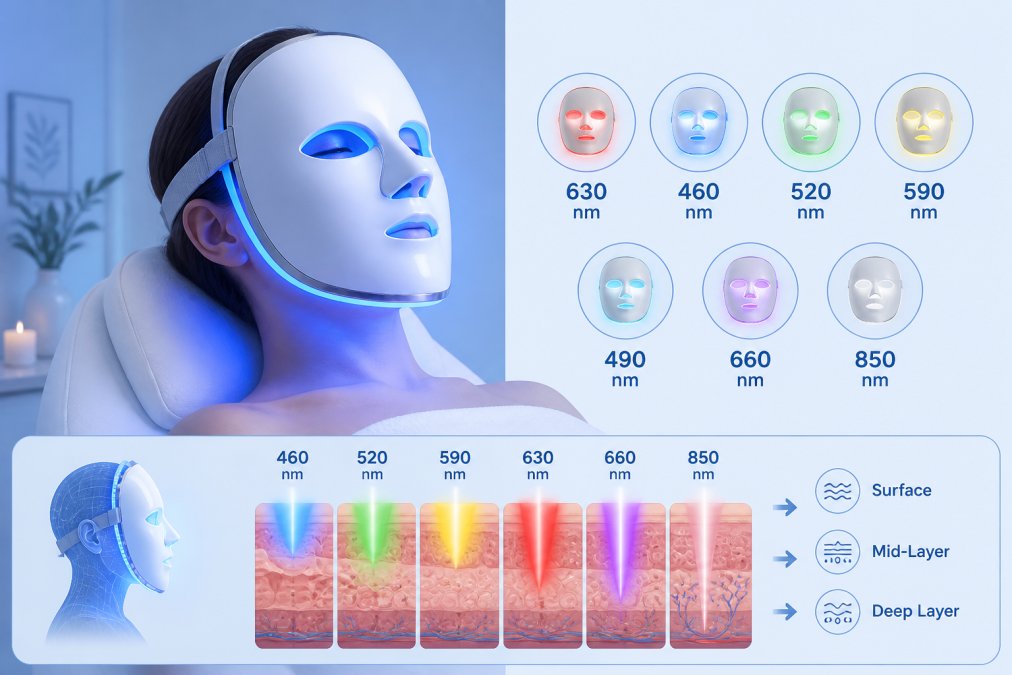
Different wavelengths trigger different biological responses: red light stimulates collagen production and reduces inflammation, blue light targets acne-causing bacteria, and near-infrared light penetrates deeper to support cellular repair at multiple levels.
Light penetration depends entirely on wavelength, measured in nanometers. Red light operates between 600-700 nanometers, blue light between 400-500 nanometers, and near-infrared light between 700-1100 nanometers. The longer the wavelength, the deeper it penetrates.
Red light at around 630 nanometers is ideal for surface-level collagen stimulation and anti-aging. Blue light at approximately 415 nanometers doesn't penetrate as deeply but effectively targets acne-causing bacteria in the epidermis. Near-infrared wavelengths around 850 nanometers reach deeper tissue, making them useful for inflammation and cellular repair.
The light doesn't generate heat; it's a non-thermal process, making it safe for daily use without risk of burning or thermal damage.
When photons from LED light hit the cytochrome c oxidase enzyme in your mitochondria, it triggers reactions that boost ATP production. More ATP means your fibroblasts have more energy to synthesize collagen, and your skin cells have more energy to repair damage and clear dead cells.
This energy boost is why LED light therapy shows cumulative results. Consistent use over weeks compounds the effect as skin cells become increasingly efficient at repair and regeneration. Most users report noticeable texture improvements after 4-6 weeks of consistent use, with more dramatic anti-aging results around 8-12 weeks.
Red light therapy masks deliver the most visible and well-documented anti-aging benefits. If your goal is reducing fine lines, improving skin elasticity, and restoring a youthful glow, red light directly stimulates fibroblasts to produce more collagen and elastin, the proteins responsible for skin firmness and elasticity.
Red light therapy increases ATP production in fibroblasts, directly translating to more collagen synthesis. Collagen production naturally declines roughly 1% per year after age 30. Red light therapy helps counteract this decline by signaling cells to produce more collagen.
Skin becomes firmer, fine lines appear shallower, and overall texture improves within 4-6 weeks of consistent use. Red light also increases blood flow to the skin, delivering more oxygen and nutrients to support the collagen-building process and giving skin a natural, healthy glow.
Fine lines and wrinkles result from collagen loss and cumulative sun damage. Red light therapy addresses both by boosting collagen production and supporting skin repair. As new collagen fills in fine lines, wrinkles appear less pronounced.
Dark spots and hyperpigmentation respond well to red light because the wavelengths stimulate cellular turnover and support the skin's natural ability to break down melanin. Combined with consistent sunscreen use, red light therapy fades existing sun damage while preventing new spots.
Anti-aging benefits are most dramatic after 8-12 weeks of consistent use, with early results appearing around week 4.
Blue light therapy masks target acne by killing acne-causing bacteria (Propionibacterium acnes) without damaging surrounding skin, making it particularly effective for active breakouts and inflammatory acne.
Blue light at approximately 415 nanometers is absorbed by porphyrins produced by acne bacteria, generating reactive oxygen species that destroy the bacterial cell wall. This process is non-antibiotic, so bacteria cannot develop resistance.
Beyond killing bacteria, blue light reduces inflammation and sebum production. Users with active acne report breakouts clearing within 1-2 weeks of consistent use, with redness and swelling diminishing noticeably. Blue light also boosts ATP production in immune cells, helping your body's natural inflammatory response resolve faster.
For best acne results, consistency matters more than duration. Using a blue light mask 3-5 times per week for 15-20 minutes typically shows faster results than occasional longer sessions.
Getting frequency and duration right is crucial for maximizing benefits while avoiding overuse.
The initial treatment phase typically lasts 8-12 weeks and involves more frequent use. Most dermatologists recommend using your LED mask 3-5 times per week for 15-20 minutes per session. This frequency allows skin cells to accumulate enough ATP and trigger visible changes in collagen production and cellular repair.
Many users see initial improvements within 3-4 weeks. More dramatic anti-aging results typically appear around week 8-10.
After the initial phase, most users transition to maintenance: 2-3 times per week for 15-20 minutes. Some users find that even 1-2 sessions per week maintains results, though consistency matters more than frequency.
Sensitive skin should start conservatively at 2-3 times per week for 10-15 minutes, gradually increasing as skin adapts. Acne-prone skin can use blue light more frequently (up to 5-6 times per week) without irritation. Red light for anti-aging typically shows better results with slightly longer sessions (20-30 minutes) but less frequent use (3-4 times per week).
LED light therapy masks are remarkably safe when used as directed, but understanding potential side effects and contraindications is essential.
Certain medications increase photosensitivity. If you're taking photosensitizing medications, including some antibiotics or retinoids, consult your dermatologist before using an LED mask.
If you have a history of skin cancer or suspicious skin lesions, get dermatologist clearance first. Photosensitive epilepsy is rare, but if you have this condition, verify that your mask uses steady, non-flickering light.
Erythema (redness) is the most common side effect and typically subsides within 30 minutes. To minimize sensitivity:
Not all LED masks are created equal. The difference comes down to wavelength accuracy, light intensity, coverage area, and build quality.
The most important factor is wavelength accuracy. Reputable manufacturers publish specific nanometer ranges: red at 600-700nm, blue at 400-500nm, near-infrared at 700-1100nm.
Coverage area matters because larger masks treat more skin surface in a single session. A mask covering your full face and neck is more convenient than one covering only the face.
FDA clearance is valuable but not essential. Many effective masks haven't pursued FDA clearance because the process is expensive. Look for clinical studies backing the device's claims.
Light intensity (measured in milliwatts per square centimeter) affects how quickly you see results. Higher intensity masks deliver faster results but require shorter sessions. Both can work depending on your schedule and skin sensitivity.
| Feature | Why It Matters | What to Look For |
|---|---|---|
| Wavelength accuracy | Determines which skin concerns are addressed | Red 630nm, Blue 415nm, Near-IR 850nm |
| Light intensity | Affects session duration and result speed | 50-200 mW/cm² is typical and effective |
| Coverage area | Determines how much skin is treated per session | Full face + neck minimum |
| Ergonomic design | Affects comfort during 15-30 minute sessions | Lightweight, adjustable straps, good weight distribution |
| Build quality | Affects durability and safety | Medical-grade materials, sealed electronics |
| Warranty | Indicates manufacturer confidence | 1-2 year minimum |
Beautivana offers a curated selection of LED masks for different needs and budgets. The 7-Color LED Facial Beauty Mask at $90.00 is an excellent entry point for users exploring LED therapy. This mask includes red, blue, green, and other wavelengths, making it versatile for both anti-aging and acne concerns.
The Beautivana 3D Wireless LED Facial Mask at $155.00 delivers cordless operation and ergonomic 3D contouring that fits different face shapes, ideal for busy professionals or frequent travelers.
The Beautivana LED Nano Mist Spa Device - 7 Color Beauty Tool at $200.00 combines LED light therapy with hydrating nano-mist technology, perfect for users wanting to enhance hydration while treating acne or aging concerns.
The Beautivana LED Facial Beauty Device at $235.50 offers professional-grade light intensity and multiple wavelength options for the fastest visible results.
All Beautivana masks are lightweight, ergonomic, easy to clean, and backed by customer support with fast U.S. shipping.
Clinical research on LED light therapy for skin is extensive and generally positive. Studies consistently show that red light increases collagen production and reduces fine lines, while blue light demonstrates significant bacterial reduction and acne improvement within 2-4 weeks of consistent use.
Consistency matters more than session length. Users treating 3-4 times per week for 15-20 minutes see better results than those doing occasional longer sessions.
For acne: Active breakouts typically begin clearing within 1-2 weeks of consistent blue light use. Complete clearing usually takes 8-12 weeks.
For anti-aging: Fine lines begin appearing less pronounced around week 4-6. Skin texture and elasticity improvements become noticeable by week 8-10. More dramatic wrinkle reduction typically requires 12+ weeks.
For general skin rejuvenation: Improved radiance appears within 2-3 weeks. Overall complexion improvement takes 8-12 weeks.
A Beautivana LED mask costs between $90 and $235. Used 3-4 times per week, a $155 mask costs roughly $0.10-0.15 per use over a 3-year lifespan. Professional LED light therapy treatments cost $50-200 per session. Even accounting for initial investment, home LED masks deliver exceptional value, with costs recouped within 2-3 months if you would have otherwise paid for professional treatments.
Clean your mask after each use by wiping the light-emitting surface with a soft, dry microfiber cloth. If the mask contacts serums or oils, use a slightly damp cloth with mild soap and water, then dry immediately. Never submerge the mask or allow water to enter electronic components.
Store your mask in a cool, dry place away from direct sunlight. Most LED masks maintain their light intensity for 3-5 years with proper care. Check the strap and electronic connections monthly for wear. If you travel frequently, store your mask in a protective case to prevent damage during transport.
The benefits of LED light therapy masks extend far beyond temporary skin improvements. With consistent use, you're investing in long-term skin health, collagen production, and cellular repair. Whether targeting acne, anti-aging, or overall skin rejuvenation, the right LED mask paired with realistic expectations and consistent use delivers professional-grade results from home. Beautivana's curated selection makes it easy to find the right device for your needs and budget, with fast U.S. shipping and customer support. Start with the 7-Color LED Facial Beauty Mask to explore the benefits, or jump to advanced options if you're ready for professional-grade results.
Photobiomodulation and collagen synthesis in dermatology
Clinical efficacy of LED light therapy for acne vulgaris
Safety profile and wavelength specifications for home-use LED devices
LED light therapy masks offer multiple benefits depending on wavelength. Red light (630 nanometers) stimulates collagen production, improves skin elasticity, and reduces fine lines and wrinkles. Blue light (415 nanometers) targets acne-causing bacteria and reduces inflammation. Near-infrared wavelengths penetrate deeper dermal layers for cellular repair and ATP production. These non-invasive benefits can improve skin texture, radiance, and overall complexion with consistent use.
Initial treatment typically involves 3-5 sessions per week for 10-20 minutes per session over 4-8 weeks. After visible results appear, most users transition to maintenance mode with 1-3 sessions weekly. Frequency depends on your skin type and specific concern, acne-prone skin may benefit from more frequent blue light sessions, while anti-aging routines focus on red light 2-3 times weekly. Consistency matters more than intensity.
LED light therapy is generally safe for most skin types, but potential side effects include mild erythema (redness), temporary skin sensitivity, or eye irritation if proper protective eyewear isn't worn. Contraindications exist for certain medications (photosensitizing drugs like tetracyclines) and conditions like active herpes simplex. Always perform a patch test, start with shorter sessions, and consult a dermatologist if you're on prescription medications or have photosensitive skin conditions.
Red light therapy (630 nanometers) stimulates collagen production, improves skin elasticity, and targets fine lines, wrinkles, and dark spots, ideal for anti-aging. Blue light therapy (415 nanometers) kills acne-causing bacteria and reduces inflammation and breakouts. Many dermatologist-recommended masks combine both wavelengths plus near-infrared for comprehensive skin rejuvenation. Choose based on your primary concern: anti-aging favors red light, while acne-prone skin benefits more from blue light.
Clinical studies support LED light therapy's effectiveness for skin rejuvenation, collagen stimulation, and acne reduction. The FDA has cleared certain LED devices for these uses. Results depend on consistent use, device quality, and realistic expectations; visible improvements typically appear after 4-8 weeks. However, results vary by skin type and individual response. Beautivana's curated selection includes devices designed for measurable skin texture, radiance, and firmness improvements when used as directed.
Clean your LED mask weekly with a soft, lint-free cloth and mild soap or gentle disinfectant. Avoid submerging electronic components in water unless the device is waterproof. Store in a cool, dry place away from direct sunlight. Check silicone components for cracks or wear monthly. Proper hygiene prevents bacterial buildup and extends device lifespan. Always unplug before cleaning and refer to your specific device's care instructions for detailed maintenance protocols.
Beautivana offers options at multiple price points: the 7-Color LED Facial Beauty Mask ($90) for entry-level multi-wavelength therapy, the 3D Wireless LED Facial Mask ($155) for cordless convenience and portability, and professional-grade devices like the LED Nano Mist Spa Device ($200) and advanced LED Facial Beauty Device ($235.50) for comprehensive skin rejuvenation. Choose based on your primary goal (acne vs. anti-aging), budget, and whether you need wireless portability for travel.
This article was written using GrandRanker