

Last Updated: September 13, 2026
Collagen boosting skincare cannot replace the collagen your skin has already lost, but it can support the collagen you still have. That distinction matters more than any product label suggests.
Here's the honest version. Collagen is the structural protein that keeps skin firm and resilient. As we age, our natural supply declines, and no cream can rebuild it the way a dermatologist can with in-office procedures. What a well-formulated product can do is create conditions where your skin holds onto moisture, looks plumper, and feels smoother over time.
This guide from Beautivana breaks down which ingredients have real evidence behind them, how to build a routine that fits a busy schedule, and what to expect.
Replacing collagen means applying the protein directly to your skin. Collagen molecules are too large to penetrate the outer layer in any meaningful way, so most of the benefit is surface-level hydration.
Stimulating collagen means using ingredients that encourage your skin's own production. This is the approach with more scientific support, though results take weeks, not days.
The three ingredients with the most consistent research behind them are retinoids, peptides, and vitamin C. Each works differently, and each has trade-offs worth knowing before you buy.
According to the American Academy of Dermatology's guidance on retinol and anti-aging, retinoids remain the most studied ingredient for improving skin texture and supporting collagen over time. Peptides act as signaling molecules that tell skin to produce more of its own structural proteins. Vitamin C supports collagen synthesis and defends against the daily environmental stress that breaks it down.
| Ingredient | How It Works | Best For | Watch Out For |
|---|---|---|---|
| Retinol | Speeds cell turnover, supports collagen | Texture and fine lines | Dryness, sun sensitivity |
| Peptides | Signal skin to build structural proteins | Sensitive skin, layering | Slower visible change |
| Vitamin C | Supports synthesis, defends against stress | Dullness, uneven tone | Oxidation in clear bottles |
Improving skin texture at home comes down to consistency, not complexity. A simple routine used nightly for eight weeks will outperform an elaborate one you abandon after ten days.
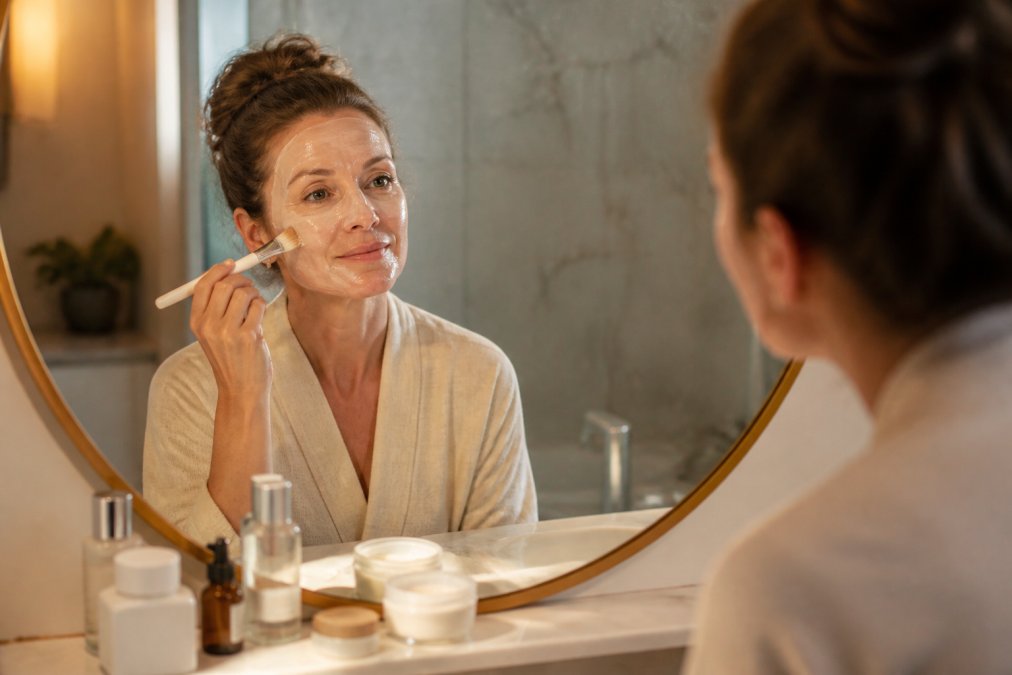
A common mistake is stacking too many active ingredients at once. Retinol, acids, and vitamin C in the same evening routine is a recipe for a compromised barrier. Space them out.
For anyone searching for the best collagen biostimulation without clinic prices, the practical answer is a layered evening routine built around proven ingredients. Professional biostimulation involves injectable treatments performed in a clinic. At-home care works differently, supporting the skin between appointments or standing in for them entirely.
[Beautivana's Retinol Collagen Gua Sha Cream](https://beautivana.com/products/retinol-collagen-gua-sha-cream) combines retinol, collagen, and peptides in a moisturizer with a built-in gua sha-style applicator, which makes the massage step easy to keep up with. For overnight support, the PDRN Collagen Peptide Night Wrapping Mask pairs PDRN, collagen, peptides, and niacinamide in a peel-off format.


If you want the whole evening handled in one purchase, the Collagen Overnight Hydration Kit bundles an ampoule, jelly cream, heated eye massager, and a night wrapping mask. And for the neck, which most routines ignore, the Collagen Retinol Neck Moisturizer brings retinol, collagen extract, peptide, and niacinamide into a dedicated cream.

Expect hydration and glow within the first week, and texture changes somewhere between eight and twelve weeks. That timeline is the part most people aren't told, and it's why so many routines get abandoned early.
The Cleveland Clinic's overview of retinoid use notes that irritation typically peaks in the first few weeks and settles as skin adjusts. What you're seeing early is moisture, not new collagen. The structural change is slower and quieter.
Most failed routines fail for the same handful of reasons, and none of them involve the product being wrong.
Skipping sunscreen is the biggest one. UV exposure breaks down collagen faster than any cream can support it, so unprotected skin works against itself. Over-exfoliating is second. Layering acids with retinol strips the barrier and leaves skin red and reactive.
Using too much product is a quieter problem. A pea-sized amount of retinol cream covers the whole face. More doesn't mean faster.
Finally, buying products with collagen listed high on the label and nothing else. Collagen alone is a moisturizer. It needs a stimulating ingredient beside it to do anything structural.
According to the FDA's consumer information on cosmetic labeling, cosmetic products cannot claim to alter skin structure, which is a useful filter when a label promises to rebuild collagen outright.
Collagen molecules are too large to pass through intact skin, so a collagen cream does not deposit new collagen directly into the dermis. What it does well is hold water at the surface, which plumps the skin and softens the look of fine lines. For actual collagen production, you need ingredients that signal the skin to build more, such as retinol and peptides. Collagen boosting skincare works best when it combines surface hydration with those signaling ingredients.
Retinol is the most studied over-the-counter ingredient for supporting collagen in the skin. Peptides, including the AH-8 peptide found in some neck creams, act as signaling molecules. Vitamin C supports collagen synthesis and defends against daily environmental stress. Niacinamide supports the skin barrier, which helps the whole process function. A routine that layers these ingredients gradually, rather than all at once, gives skin time to adjust and reduces irritation risk.
Hydration changes show up within days: skin feels softer and looks plumper. Texture and firmness changes take longer because they depend on new collagen forming beneath the surface. Most people notice meaningful differences after 8 to 12 weeks of consistent use. If you stop, the improvements fade because the skin returns to its previous turnover rhythm. Consistency matters more than the number of products you layer on.
They work through different routes. Supplements are digested and broken into amino acids, which the body distributes wherever it needs them, not specifically to your face. Topical products stay on the skin, where they hydrate and deliver signaling ingredients like retinol and peptides. Many people use both. If your goal is visible texture improvement, a topical routine with proven ingredients gives you more direct control over what reaches your skin.
Sun exposure is the biggest driver of collagen breakdown, and Atlanta summers mean high UV levels for much of the year. Daily sunscreen matters more than any single serum. Pollution, smoke, and repeated exposure to blue light from screens add oxidative stress. Sleep quality and steady blood sugar also affect how well skin repairs itself overnight. Protecting skin from UV while using collagen boosting skincare gives you the best chance of visible results.
The challenge with collagen skincare isn't finding products. It's choosing a routine you'll actually keep for three months and sticking with it past the point where most people quit. Beautivana stocks spa-inspired Korean skincare and at-home devices built for exactly that kind of consistency, with collagen-rich masks, retinol and peptide creams, and fast U.S. shipping to your door. Get started with Beautivana and build an evening routine you'll still be using in twelve weeks.