

Last Updated: September 8, 2026
Before asking is microneedling safe for sensitive skin, it helps to define what "sensitive" actually means in a dermatological context. Sensitive skin is a condition where the skin barrier is compromised, making it more reactive to environmental triggers, active ingredients, and physical manipulation. This reactivity often shows up as redness, stinging, burning, or flaking after contact with products or treatments that leave normal skin unaffected.

The core tension is straightforward: microneedling works by creating controlled micro-injuries to stimulate collagen production, and sensitive skin is already dealing with inflammation and barrier disruption. That doesn't make the treatment automatically off-limits, but it changes the risk calculation significantly.
We regularly counsel customers who are drawn to the anti-aging benefits of microneedling but worried about how their reactive skin will respond. The honest answer is that is microneedling safe for sensitive skin when approached with the right preparation, depth, and aftercare. The danger comes from treating sensitive skin the same way you would treat resilient, thick skin.
What most guides miss is that sensitivity exists on a spectrum. Some people have mild reactivity to certain ingredients, while others have chronic conditions like rosacea or eczema. The severity of your sensitivity determines whether microneedling is a viable option or a recipe for a flare-up.
At-home microneedling for sensitive skin operates on a fundamentally different scale than professional treatments. Clinic devices typically reach depths of 1.5 to 2.5 millimeters, penetrating deep enough to trigger significant collagen remodeling (peer-reviewed research). At-home devices, by contrast, are designed for safety first, usually maxing out around 0.25 to 0.5 millimeters. That shallower depth targets the epidermis and upper dermis, which means less trauma and a lower risk of adverse reactions.
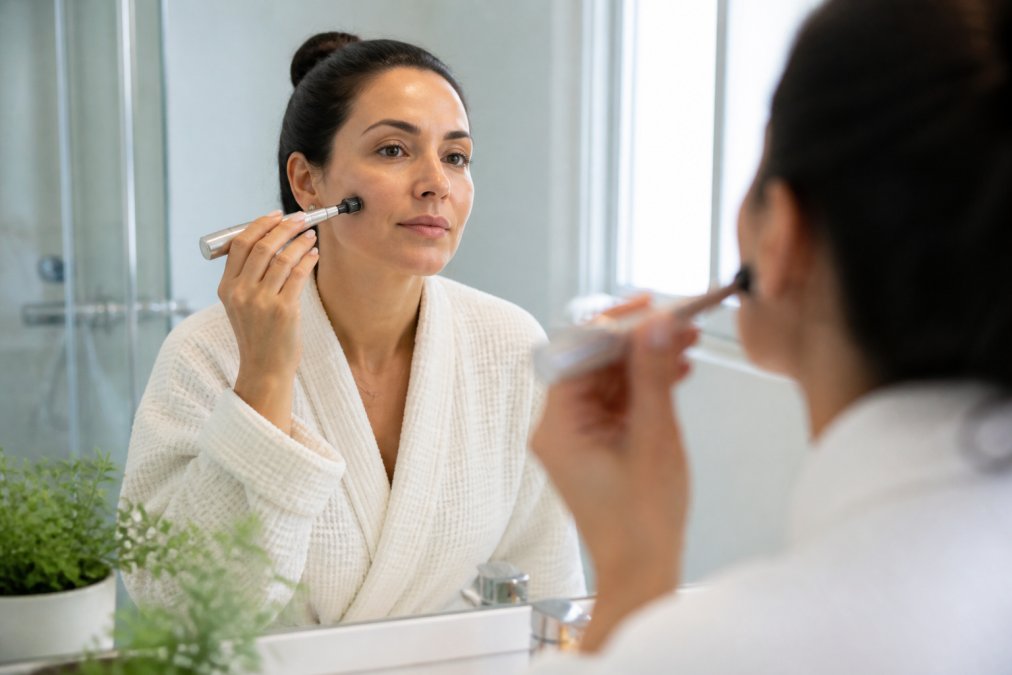
That depth difference matters enormously for sensitive skin. At 0.25 millimeters, you're essentially enhancing product absorption and encouraging surface cell turnover without breaking the skin's integrity. This is why very shallow at-home rollers are considered relatively low-risk when used correctly, though caution is still recommended for anyone with active breakouts or inflammatory conditions.
Clinic sessions deliver dramatic results because they go deeper, but they also require numbing cream, longer recovery, and a professional assessment of whether your skin can tolerate the trauma. For those with reactive skin, the at-home route offers a gentler entry point. You can test how your skin responds at a shallow depth before committing to anything more aggressive.
Microneedling recovery time for sensitive skin typically runs longer than the 24 to 48 hours that normal skin needs. When your barrier is already compromised, the skin's repair mechanisms have to work harder, which means redness and tightness can persist for three to five days. Some people with very reactive skin report visible pinkness for up to a week.
The first 12 hours after treatment are the most telling. Your skin will look flushed, similar to a mild sunburn, and may feel warm to the touch. This is a normal inflammatory response, the signal that collagen production has been triggered. What you want to avoid is that flush intensifying into swelling, blistering, or persistent burning, which indicates the treatment was too aggressive for your skin type.
Here is a realistic timeline for sensitive skin:
| Phase | What You'll Notice | Recommended Care |
|---|---|---|
| Hours 0-12 | Redness, warmth, slight tightness | Gentle cleansing, barrier cream only |
| Days 1-3 | Pinkness fades, possible flaking | Continue barrier support, no active ingredients |
| Days 4-7 | Skin returns to baseline | Slowly reintroduce gentle serums |
| Days 7-14 | Subtle improvement in texture | Resume normal routine, sunscreen daily |
The most common mistake during microneedling recovery time for sensitive skin is rushing back to active ingredients. Vitamin C, retinol, and alpha-hydroxy acids will sting on freshly needled skin and can trigger a reaction that sets your recovery back. Give your barrier a full week before reintroducing anything beyond hydration.
The best serums for microneedling sensitive skin are those that support barrier repair rather than aggressively exfoliate or stimulate. Immediately after needling, your skin is temporarily more permeable, which means everything you apply absorbs faster, including potential irritants. This is why the serum you choose matters as much as the device itself.
Hyaluronic acid is the gold standard for post-microneedling hydration because it pulls water into the skin without causing irritation. Ceramides are equally important, as they are the lipid building blocks that restore a compromised barrier. Panthenol, also known as vitamin B5, calms inflammation and supports the skin's natural healing process.
The Beautivana Ceramide Skin Barrier Moisturizer combines all three of these ingredients in a formula designed specifically for dry, sensitive, and dehydrated skin. At $24.99 for 80 mL, it delivers the barrier-supporting ingredients your skin needs after needling without the fragrance or essential oils that can trigger reactivity.
Centella Asiatica, often called Cica, is another ingredient worth seeking out. This botanical has a long history in Korean skincare for its soothing properties. The Beautivana Asiatica Daily Skincare Set features Cica as its hero ingredient, making it a sensible choice for the days following treatment when your skin needs calming support rather than stimulation.

Is microneedling safe for sensitive skin if you have an active skin condition? Generally, no. Anyone with active acne, rosacea flares, eczema, or psoriasis should avoid microneedling until the condition is under control. Needling over active inflammation can spread bacteria, worsen flares, and lead to scarring.
The Food and Drug Administration regulates microneedling devices as cosmetic tools, and the FDA guidance on microneedling safety explicitly warns against using these devices on irritated, sunburned, or broken skin. The agency also cautions that unsterile devices can introduce bacteria into the skin, leading to infection.
Other contraindications include:
If you have any of these conditions, microneedling is not worth the risk. The potential for hyperpigmentation, infection, or prolonged inflammation outweighs any cosmetic benefit. A dermatologist can assess your specific situation and confirm whether your skin is a candidate.
Your skin will tell you when microneedling is too aggressive, but only if you know what to listen for. Mild redness that fades within a day or two is expected. The warning signs start when that redness intensifies rather than diminishes, or when it's accompanied by swelling that doesn't subside within 48 hours.
Persistent burning or stinging beyond the first 24 hours is another red flag. Some discomfort immediately after treatment is normal, but that sensation should fade as your skin begins repairing. If you're still reaching for a cold compress on day three, your skin is telling you the depth or frequency was too much.
Other signs that microneedling is too harsh for your skin include:
If microneedling feels like too much risk for your sensitive skin, you have alternatives that deliver comparable benefits without the physical trauma. LED light therapy is the closest substitute, using specific wavelengths of red and near-infrared light to stimulate collagen production at the cellular level without breaking the skin's surface.
Red light therapy has a strong safety profile for sensitive skin because it reduces inflammation rather than causing it. The National Institutes of Health research on red light therapy has documented its effectiveness for skin rejuvenation with minimal adverse effects, making it a sensible option for reactive skin types.
Chemical exfoliation with polyhydroxy acids (PHAs) offers another route. These gentle acids break down dead skin cells on the surface without penetrating deeply enough to cause the stinging associated with stronger acids like glycolic acid. Regular PHA use improves texture and radiance over time, though results are subtler than microneedling.
Beautivana carries advanced beauty devices like LED facial masks that deliver red light therapy in a hands-free format. These tools fit into a nightly routine without the recovery time or risk profile of microneedling. The at-home versions cost a fraction of a session series.
Is microneedling safe for sensitive skin? The answer is yes, but only under specific conditions. If your sensitivity is mild, your skin is currently calm, and you use a shallow-depth at-home device with proper technique, microneedling can improve texture and product absorption without serious side effects. If your sensitivity is severe, you have an active skin condition, or you're prone to inflammation, the risk outweighs the reward.
The deciding factors come down to your skin's current state, the depth of the device, and your aftercare discipline. Start with the shallowest depth available, patch test on a small area, and watch how your skin responds over a full week before treating your entire face. Respect the recovery window, and don't rush back to active ingredients.
A combination approach can work best: gentle microneedling every few weeks for collagen stimulation, paired with barrier-supporting skincare in between. The key is listening to your skin and adjusting based on what it tells you.
Microneedling asks more of sensitive skin than it does of other skin types, but that doesn't mean the treatment is off-limits. The path forward is preparation, conservative depth, and disciplined aftercare. Beautivana offers the barrier-repair moisturizers and soothing Cica sets your skin needs to recover properly, plus gentler beauty devices if you decide microneedling isn't right for you. Shop our best sellers and build a routine that respects your skin's limits while still delivering visible results.
Permanent damage is rare when you use a device correctly and follow guidelines. The risk increases with needles longer than 0.5 mm at home, pressing too hard, or using the device on active breakouts or broken skin. Sensitive skin types should start with the shortest needle length and always use a sterile device. Stop immediately if you feel sharp pain, not just tingling. When in doubt, consult a dermatologist before your first session.
Stop using retinol, strong acids, and exfoliating scrubs for at least three to five days before treatment. Cleanse your face thoroughly and let it dry completely. Avoid microneedling if you have a sunburn, active acne, eczema, or rosacea flare-up. For sensitive skin, a patch test on a small area like your jawline 24 hours in advance helps confirm your skin tolerates the procedure.
Sensitive skin typically needs 48 to 72 hours for visible redness to fade, slightly longer than the 24 to 48 hours common for other skin types. You may feel tightness or see mild swelling for the first day. Avoid makeup, direct sun exposure, and active skincare ingredients for at least 24 hours. Use only a gentle cleanser and a ceramide moisturizer until your skin feels completely calm.
Look for hydrating, barrier-supporting serums without active acids, retinol, or fragrance. Hyaluronic acid is the safest choice because it draws moisture into the skin without irritation. Centella Asiatica (cica) and panthenol (vitamin B5) also help soothe skin after treatment. Products like the Beautivana Asiatica Daily Skincare Set support a comfortable, hydrated feel, while a ceramide moisturizer helps restore your barrier during recovery.