

Last Updated: September 29, 2026
The difference between professional grade skincare vs drugstore brands usually comes down to ingredient concentration, delivery format, and how the product is formulated, not just the label on the bottle. At Beautivana, we hear this question constantly from customers in Atlanta and across the U.S. who want to know whether the extra spend is justified. The short answer: sometimes it is, and sometimes a well-chosen drugstore product does the job just as well. Below, we break down what actually separates the two categories, where the price gap comes from, and how to decide which approach fits your skin and your budget.
The biggest misconception is that "professional" means stronger in every way. It doesn't. A professional-grade serum might carry a higher percentage of an active ingredient, but it might also use a gentler delivery system that reduces irritation. A drugstore moisturizer might be thinner but perfectly adequate for basic hydration. The real difference shows up in formulation intent.
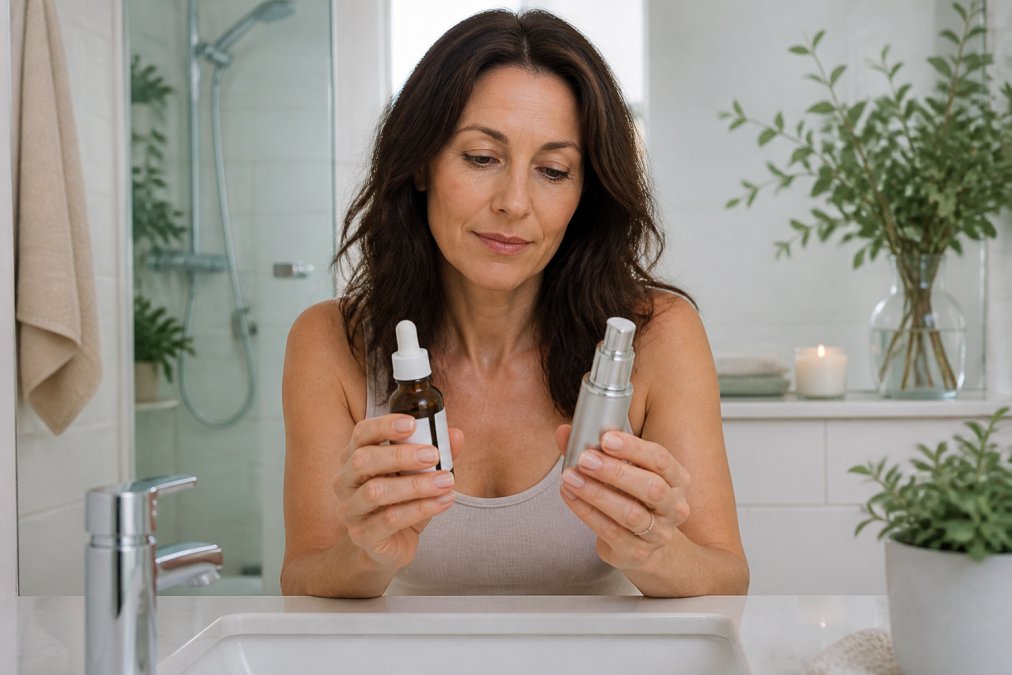
Concentration is where professional skincare products typically pull ahead, but only for certain ingredients. Retinoids, vitamin C, niacinamide, and exfoliating acids are the ones where percentage makes a visible difference over time. A drugstore retinol might sit at a low concentration designed for mass-market tolerance, while a professional formula may go higher with a buffered delivery system.
What most guides miss is that concentration without a stable delivery system is wasted. Vitamin C oxidizes quickly. Retinol degrades in light and air. Professional formulations often invest in packaging and stabilizers that keep the active ingredient potent longer.
If you're building a routine, start with one active ingredient at a time. Layering three new actives in the same week is a common mistake that leads to irritation and abandoned routines.
Medical grade skincare benefits are most convincing for concerns that need sustained active delivery: uneven tone, fine lines, and texture. The research on ingredients like retinoids and vitamin C is well established in dermatology, and higher concentrations generally produce more noticeable results when tolerated.
That said, "medical grade" is a marketing term, not a regulatory category in the U.S. The FDA regulates cosmetics and drugs differently, and many products marketed as medical grade are cosmetics under the law. That doesn't make them ineffective, but it does mean you should judge them by their ingredient list, not their label.
For a deeper look at how the FDA classifies skincare products, see the FDA cosmetics and drug classification guidance.
Building a professional skincare routine at home comes down to sequencing and consistency, not the number of products. A simple four-step structure works for most people:
For those who want a structured starting point, kits like the Beautivana LED PDRN Facial Kit bundle a 7-color LED facial mask with PDRN Pink toner pads, peptide serum, gel masks, and a collagen peptide moisturizer, which removes the guesswork of matching products to a device.

Price is where the categories diverge sharply, and where the value calculation gets personal. Drugstore products are priced for volume. Professional products are priced for concentration and formulation. At-home kits sit in between, bundling multiple steps into a single purchase.
Beautivana 24K Gold, PDRN & EMS Facial →
| Approach | Typical Cost | What You Get | Best For |
|---|---|---|---|
| Drugstore basics | Low per item | Cleanser, moisturizer, SPF | Simple hydration, barrier support |
| Professional serums | Higher per item | Higher-concentration actives | Targeted concerns, visible change |
| At-home kits | Bundled price | Multiple steps plus tools | Structured routines, device use |
Beautivana's at-home kits range from $99.99 for the 24K Gold, PDRN & EMS Facial Kit to $149.99 for the LED Hydration Facial System Kit and the LED PDRN Facial Kit. The Ultimate Pore Care Facial System and Ultimate Hydration Facial Kit are each $139.99.
A single professional facial in Atlanta can cost more than an entire at-home kit, and the kit can be used repeatedly. That math is why at-home systems have grown in popularity.
Drugstore products are enough when your concern is basic hydration, cleansing, or sun protection. A fragrance-free moisturizer and a well-formulated sunscreen from a drugstore will do more for your skin than an expensive serum applied inconsistently.
They're not enough when you're targeting a specific concern that needs sustained active delivery, like uneven tone or fine lines, and you've plateaued on lower concentrations. That's when stepping up to a professional formula, or a structured at-home routine, makes sense.
The right approach depends on your goal, not your budget alone. For basic maintenance, drugstore products are a smart, cost-effective choice. For targeted concerns that need higher concentrations and consistent delivery, professional-grade formulas and structured at-home kits deliver more.
What matters most is consistency. A simple routine used daily outperforms an elaborate one used sporadically, every time. If you're in Atlanta and searching for professional-inspired skincare near me, Beautivana ships Korean skincare and beauty devices directly to your door with fast U.S. shipping.
The main differences are active ingredient concentration, formulation quality, and packaging. Professional grade skincare typically contains higher percentages of actives like retinoids, vitamin C, and peptides, plus more stable delivery systems. Drugstore brands often use lower concentrations to suit a wider range of skin types and keep costs down. Packaging also matters: airless pumps and opaque bottles protect unstable ingredients better than jars, which matters for how well a product performs over its shelf life.
The FDA regulates cosmetics under the Federal Food, Drug, and Cosmetic Act, but it does not approve skincare products before they go to market the way it approves drugs. Both drugstore and professional grade cosmetics must meet the same safety and labeling rules. The term 'medical grade' is a marketing phrase, not an FDA category. What separates products is ingredient concentration and formulation quality, not a special regulatory tier that only professional lines can access.
Yes, and many dermatologists recommend it. A common approach is to use professional grade products for your treatment steps, like serums with active ingredients, and drugstore options for basics like cleansers, moisturizers, and sunscreen. The key is to introduce one active at a time and watch for irritation. If you layer a high-concentration retinol from a professional line with an exfoliating acid from the drugstore, you may overwhelm your skin barrier.
It depends on what you're treating. If your concern is dullness, dryness, or mild uneven texture, a well-formulated drugstore routine can deliver results. If you're targeting visible signs of aging, pigmentation, or barrier repair, higher concentrations of active ingredients in professional grade skincare may give you more noticeable change. Beautivana's at-home kits, like the LED PDRN Facial Kit at $149.99, bundle professional-inspired treatments with devices so you can test results without committing to a full clinical line.
Choosing between professional grade skincare vs drugstore brands doesn't have to be an all-or-nothing decision, but it does require matching the product to your actual goal. Beautivana helps you build a spa-inspired routine at home with curated Korean skincare, LED facial masks, PDRN serums, and advanced beauty devices designed to support visibly smoother, more radiant-looking skin. Get started with Beautivana and find the routine that fits your skin and your budget.