

Last Updated: September 14, 2026
If you're wondering why does my face sting when moisturizing, the product isn't the problem. Your skin barrier is. That stinging sensation is your skin telling you its outer layer has been compromised, and even gentle ingredients now reach nerve endings they normally wouldn't touch. This guide from Beautivana breaks down why it happens, what's causing it, and how to calm things down fast.

Skin barrier is the outermost layer of your skin, a mix of lipids, ceramides, and dead skin cells that keeps moisture in and irritants out. When that layer thins or cracks, almost anything can trigger a reaction. That's why the same moisturizer that felt fine last month now feels like it's burning. Your skin didn't develop a sudden allergy. Its defenses dropped.
Most people assume stinging means they're allergic to a product. Usually, it means the opposite: their barrier is damaged and needs rebuilding, not more exfoliating, not a new "gentler" product, but actual repair.
A damaged skin barrier shows up as stinging, redness, tightness, and a rough, flaky texture that no amount of moisturizer seems to fix. The stinging happens because water and water-soluble ingredients pass through gaps in the barrier and reach nerve endings in the epidermis (Checking your browser). Healthy skin blocks this. Compromised skin doesn't.
What most guides miss is that these symptoms often get worse before they get better. If you keep applying active ingredients on a broken barrier, the stinging compounds. The fix isn't a stronger product. It's stripping your routine back to basics.
The ingredients most likely to sting are exfoliating acids, retinoids, high-concentration vitamin C, and fragrance (pubmed.ncbi.nlm.nih.gov). These aren't "bad" ingredients. They're simply too much for compromised skin. Even some preservatives and penetration enhancers can trigger stinging when the barrier is thin.
The ingredients you do want are ceramides, panthenol, hyaluronic acid, glycerin, and squalane. These rebuild rather than strip. A moisturizer built around ceramides, like the Beautivana Ceramide Skin Barrier Moisturizer, gives your skin the lipids it's missing instead of adding more stress.
Repairing your skin barrier at home takes two to four weeks of consistent, minimal care (the American Academy of Dermatology). The goal is to stop stripping your skin and give it the ingredients it needs to rebuild. Cut everything non-essential from your routine and stick to a four-step process morning and night.
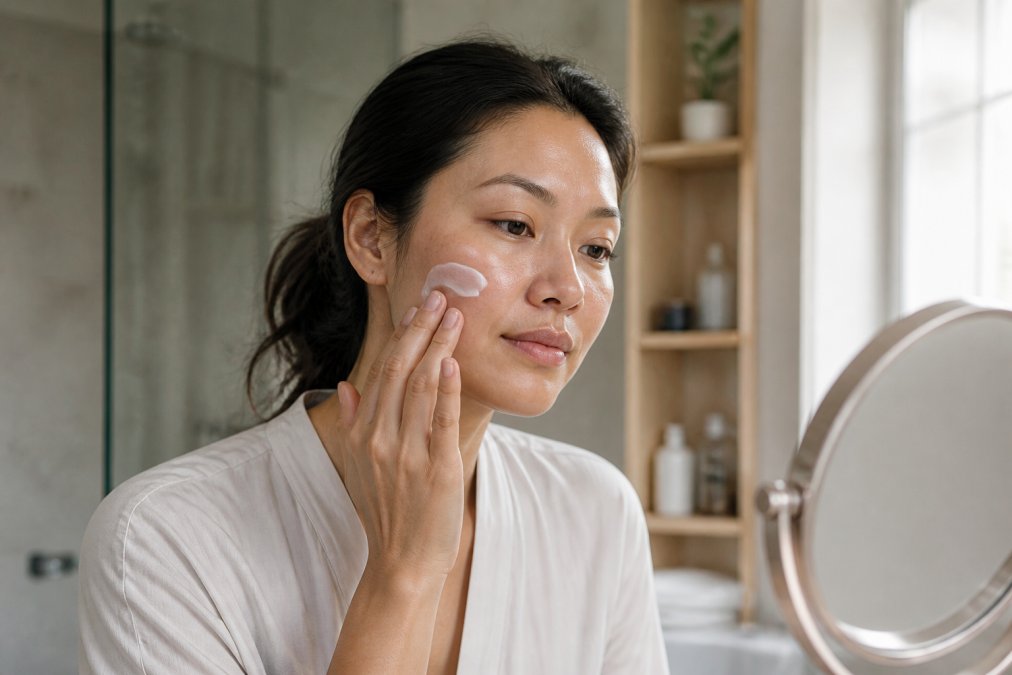
Patch testing skincare products takes 24 to 48 hours and prevents most reactions. Apply a small amount behind your ear or on your inner forearm, wait a full day, and check for redness, swelling, or stinging. If your skin reacts on the arm, it will almost certainly react on your face.


Most people skip patch testing because they're excited about a new product. That's exactly when it backfires. If your skin is already compromised, one bad product can set your recovery back a week. Test first, especially with anything containing acids, retinol, or vitamin C.
Wash the product off immediately if the stinging lasts longer than 60 seconds, if you see visible redness or swelling, or if the sensation intensifies rather than fades. A brief tingle is normal on compromised skin. Pain is not.
See a dermatologist if stinging continues after two weeks of barrier repair, if you develop hives, blisters, or swelling, or if the reaction spreads beyond where you applied the product. These signs point to contact dermatitis or an underlying condition that needs medical attention, not a new moisturizer.
If you live in Atlanta, humidity swings between seasons can aggravate a damaged barrier, so adjust your routine with the weather rather than fighting it. A heavier moisturizer in winter and a lighter one in summer keeps your skin from overreacting to the change.
The stinging isn't a sign your skin is "sensitive." It's a sign your barrier needs a break from actives and a return to basics. Cut the exfoliants, add ceramides, and give your skin two to four weeks to rebuild. Beautivana carries a full barrier-repair routine, from the Non-Drying Glycerin Cleanser to the Ceramide Skin Barrier Moisturizer, with fast U.S. shipping so you can start repairing your skin this week.
A brief tingle can happen when very dry skin meets a water-based product, but stinging that lasts more than a minute or two is not normal. Dry skin often means a weakened barrier, so water, fragrance, and preservatives reach nerve endings more easily. If the sting fades fast and leaves no redness, your skin is likely just thirsty. If it keeps burning, stop the product and rebuild your barrier with a ceramide moisturizer before trying it again.
The clearest signs of a damaged skin barrier are stinging or burning from products that used to feel fine, redness that lingers, tightness after cleansing, flaking, and skin that feels rough rather than plump. You may also notice more breakouts or sensitivity to ingredients you tolerated before. A damaged barrier lets irritants in and moisture out, which is why even a basic face moisturizer can suddenly sting. Scaling back actives for one to two weeks usually calms things down.
If the stinging is sharp, keeps building, or comes with redness, swelling, or itching, rinse it off with lukewarm water right away and skip that product for now. A mild sting that fades within a minute is usually a sign of dryness rather than an allergy, so you can keep it on and watch how your skin behaves. When in doubt, patch testing skincare products on your inner forearm for 48 hours before using them on your face tells you a lot.
Yes, and it is one of the most common causes. Daily use of AHAs, BHAs, retinol, or scrubs strips the outer layer of skin, so the barrier that normally keeps irritants out gets thinner. Once that happens, water, fragrance, and preservatives in a moisturizer reach nerve endings and cause that familiar burn. Pausing exfoliants for one to two weeks while using a ceramide moisturizer and a non-drying glycerin cleanser is the fastest way to settle things.