
Last Updated: July 25, 2026
According to a 2026 analysis of the at-home beauty device market, consumers spend an average of $200-400 annually on facial devices, seeking professional-grade results at accessible prices. At Beautivana, we've tested devices across multiple price points to identify tools that bridge cost and efficacy. Below, we show you how to evaluate beauty devices based on skin concerns, budget, and long-term maintenance costs, because true ownership cost extends far beyond the initial purchase.
The sticker price tells only half the story. When evaluating affordable luxury beauty devices, you're committing to three layers of cost: the device itself, required consumables, and time investment to see results. A device marketed at $79.99 can cost $300 per year once you factor in replacement gels, serums, or disposable heads. Some devices like the Droplette Micro-Infuser require proprietary serum capsules that lock you into ongoing subscription costs. Others, like traditional microcurrent tools, demand consistent gel purchases but offer flexibility in product choice.
The other hidden cost is the learning curve. Devices like the Beautivana Wireless Microneedling Pen Kit or RF tools require proper technique to avoid irritation.
What separates a $79 microcurrent device from a $399 luxury version is often durability, warranty coverage, and the supporting product ecosystem. Battery degradation, charging port failure, and electrode wear are real concerns manufacturers rarely discuss.
Consider consumables carefully. Microcurrent devices like the NuFace Mini include gel activator in the starter kit, but refills run roughly $30-40 for a 2-month supply. The Beautivana 3-in-1 Microcurrent Facial Beauty Device at $79.75 uses standard conductive gel, giving you flexibility to choose budget-friendly alternatives without sacrificing results.
Warranty and customer support matter more than most realize. Brands like Beautivana and TheraBody typically offer extended support and replacement options, adding real value to the initial purchase.
This entry point doesn't feel like a compromise. The Beautivana 3-in-1 combines microcurrent, LED light therapy, and a beauty massager in a single wand, making it one of the most versatile affordable luxury beauty devices at this price. You get three distinct treatment modes: microcurrent for lifting and toning, red light for anti-aging and collagen stimulation, and massage for lymphatic drainage and puffiness reduction.
The device uses standard conductive gel, so you're not locked into proprietary serums. Battery life runs approximately 90 minutes per charge, sufficient for 30-45 days of regular use. Users report visible improvements in skin firmness within 4-6 weeks of consistent use, though results vary by skin type.
What stands out is the combination of technologies. Most budget microcurrent tools offer only the current; this bundles in LED therapy, which independently supports collagen production and skin barrier health. The trade-off: the device lacks advanced app integration found in premium options like the ZIIP HALO or NuFace Mini.

The NuFace Mini Facial Toning Device represents the "affordable luxury" sweet spot for many consumers. At $220 for the starter kit, it's roughly 2.8 times the cost of the Beautivana 3-in-1, but buys several advantages. The NuFace Mini includes an app with guided treatments, real-time progress tracking, and personalized routines. The device delivers a gentler "soft wave" microcurrent, which some users find more comfortable.
However, the NuFace Mini requires consistent gel replenishment at roughly $30-40 per 2-month supply, totaling $180-240 annually. The device does only one thing: microcurrent toning. It doesn't include LED therapy, massage, or RF technology.
For consumers valuing simplicity and proven brand reputation, NuFace Mini is the choice. For those prioritizing versatility and cost-efficiency, the Beautivana 3-in-1 delivers more features at a fraction of the price.
LED light therapy has legitimate clinical backing. Red light (around 630nm wavelength) stimulates collagen production and reduces fine lines. Blue light (around 415nm wavelength) targets acne-causing bacteria. Near-infrared light (around 830nm wavelength) penetrates deeper into the dermis, supporting skin elasticity.
The CurrentBody Skin LED Light Therapy Mask costs $380-470 and uses 132 LEDs with red and near-infrared wavelengths. It's FDA-cleared and clinically proven to reduce wrinkle volume within 28 days of daily use. However, the price puts it out of reach for budget-conscious consumers.
More affordable LED options exist but often sacrifice LED count, wavelength precision, or treatment area. A $100-150 LED mask might use 50-80 LEDs instead of 130+, meaning less even light distribution and potentially slower results.
Red light alone is sufficient for general anti-aging and collagen stimulation. If your primary concern is fine lines, skin texture, or overall radiance, a red-light-only device works.
Multi-spectrum devices add blue light for acne, amber light for skin tone balance, and near-infrared for deeper penetration. If you have acne or oily skin prone to breakouts, multi-spectrum is worth the additional cost. If your concerns are purely anti-aging, red light alone is sufficient and often more affordable.
Clinical evidence for at-home beauty devices is mixed but increasingly positive. Microcurrent technology has been used professionally for decades, and peer-reviewed research supports its ability to stimulate facial muscles and improve skin firmness. LED light therapy is similarly well-documented, with studies confirming that specific wavelengths stimulate collagen production and reduce inflammation.
However, the gap between clinical research and real-world results is significant. Clinical studies typically involve consistent, supervised use over 8-12 weeks with professional-grade devices. Real-world consumers often use devices inconsistently or expect faster results than research timelines suggest.
The honest truth: at-home beauty devices work best for people with mild to moderate skin concerns who use them consistently and have realistic timelines. If you have severe sun damage, deep wrinkles, or significant acne scarring, professional treatments will outperform at-home devices.
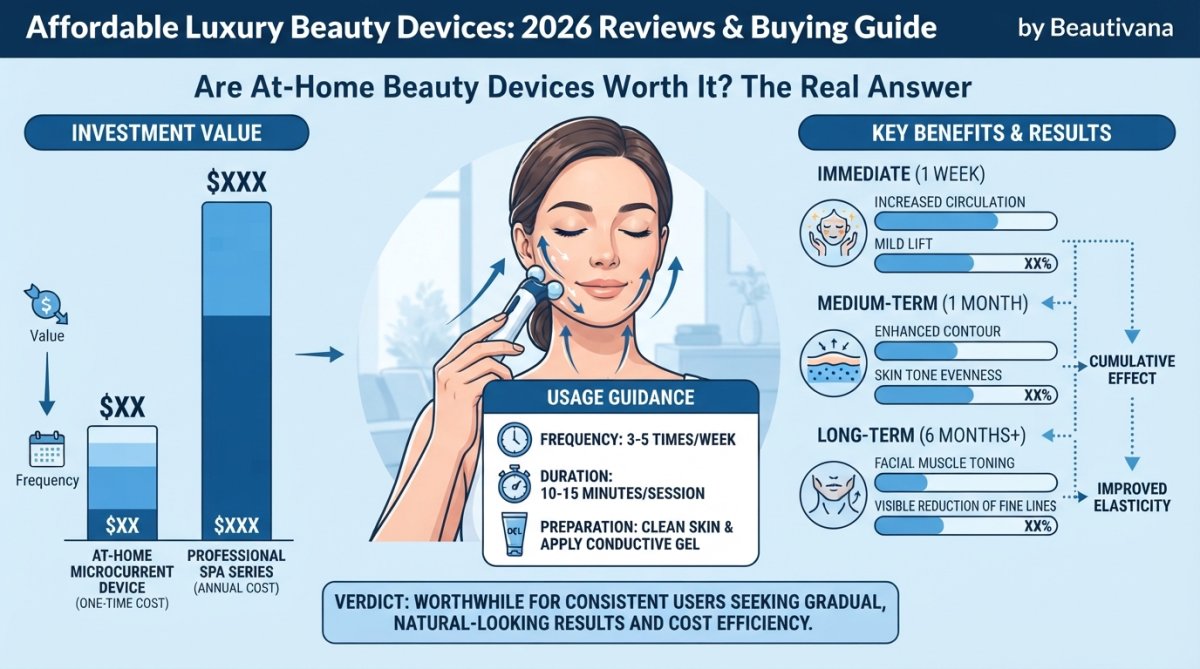
Microcurrent devices typically show initial results within 2-3 weeks of consistent use (5-6 sessions per week), with more dramatic improvements visible by week 8-12. LED light therapy requires longer investment. Red light for collagen stimulation typically shows visible results by week 4-6 of daily or near-daily use. Blue light for acne shows improvement in 2-3 weeks if used consistently.
RF (radiofrequency) devices are slower but potentially more impactful. Results typically emerge at the 6-8 week mark and continue improving through week 12-16. The critical factor is consistency. Missing sessions extends timelines by 50-100%.
| Device Type | Timeline to Initial Results | Timeline to Visible Results | Consistency Required | Long-Term Maintenance |
|---|---|---|---|---|
| Microcurrent | 2-3 weeks | 6-8 weeks | 5-6x/week | 2-3x/week ongoing |
| LED (red light) | 4-6 weeks | 8-10 weeks | Daily or near-daily | 3-5x/week |
| LED (blue light) | 2-3 weeks | 4-6 weeks | Daily or near-daily | 3-5x/week |
| RF | 6-8 weeks | 10-12 weeks | 2-3x/week | 1-2x/week |
| Microneedling | 2-4 weeks | 6-10 weeks | 1-2x/week | 1x/month |
Different technologies address different problems. Microcurrent works best for sagging skin, loss of definition, and facial sculpting. LED light therapy or RF is more effective for fine lines and wrinkles. Acne and active breakouts respond best to blue light LED therapy or certain RF frequencies.
Skin texture, enlarged pores, and uneven tone respond well to microneedling or RF. Dark circles and puffiness under the eyes benefit from lymphatic drainage through dedicated devices or the massage function on versatile devices like the Beautivana 3-in-1. Red light LED therapy also helps reduce dark circles by improving circulation and collagen density.
Beauty devices aren't universally safe. Pregnant women should avoid microcurrent, RF, and microneedling devices due to insufficient safety data. Pacemaker users must avoid any electromagnetic devices, including certain RF and microcurrent tools. People taking photosensitizing medications (like doxycycline for acne) should avoid LED light therapy.
Active skin infections, open wounds, or severe dermatitis are absolute contraindications. People with rosacea or severe sensitivity should start with red light only and avoid blue light, which can trigger rosacea flares. People with melasma should avoid LED light therapy entirely, as light stimulation can darken hyperpigmented areas.
If you're using topical retinoids (tretinoin, adapalene) or benzoyl peroxide, be cautious with microneedling or aggressive RF, as these combinations can cause excessive irritation. Consult your dermatologist before combining treatments.
The beauty device industry generates significant electronic waste. Devices with non-replaceable batteries, sealed electronics, and proprietary components can't be easily repaired or recycled. When the battery dies after 3-4 years, the entire device becomes e-waste.
Some manufacturers design for longevity with replaceable batteries, modular components, and repairable electronics that extend device lifespan. The Beautivana approach emphasizes durability and repairability. Devices are designed to last 5+ years with proper care, and battery replacement is possible if needed.
Consider the consumables footprint as well. Devices requiring disposable gel cartridges, replacement heads, or single-use serums generate ongoing waste. Devices using standard conductive gel or refillable containers reduce consumables waste. The most sustainable choice is often the most durable choice.
Microcurrent stimulates facial muscles, creating lifting and toning effects. Results are visible quickly (within weeks) but are primarily cosmetic, you're tightening existing tissue, not generating new collagen. Microcurrent is ideal for preventative care and addressing sagging or loss of definition.
RF (radiofrequency) heats deeper skin layers, triggering collagen remodeling. Results take longer to appear (6-12 weeks) but are more dramatic and longer-lasting. RF addresses wrinkles, texture, and skin laxity through actual tissue remodeling.
LED light therapy uses specific wavelengths to stimulate cellular processes. Red light boosts collagen production and circulation. Blue light kills acne bacteria. Near-infrared penetrates deepest, supporting elasticity. LED results are gradual but cumulative, and the technology is gentle enough for daily use.
For pure anti-aging and wrinkle reduction, RF wins. For quick lifting and toning, microcurrent wins. For gentle, consistent improvement and acne treatment, LED wins. For versatility and addressing multiple concerns, multi-technology devices like the Beautivana 3-in-1 offer a practical compromise.
The Beautivana BeautyBiowave RF Facial Beauty Device at $74 represents exceptional value in the RF category. RF devices typically cost $200-500, so a functional RF tool at $74 is genuinely rare. The device delivers radiofrequency energy to stimulate collagen remodeling, addressing wrinkles, skin laxity, and texture. Results emerge around week 6-8 of consistent use (2-3 times weekly), with visible improvements in skin firmness and fine line reduction by week 12.
The Beautivana Wireless Microneedling Pen Kit at $155 is a professional-grade microneedling tool at a fraction of professional pricing. Microneedling creates controlled micro-injuries that trigger collagen production and skin remodeling. The wireless design offers freedom of movement, and adjustable needle depth allows customization for different facial areas and skin sensitivities. Results emerge within 2-4 weeks but continue improving through week 8-12.
Both advanced Beautivana options deliver professional-level results at consumer pricing. The RF device is more forgiving for beginners, while the microneedling pen requires more technique and caution.
In an industry plagued by counterfeit products and misleading marketing, authenticity matters. Beautivana curates spa-inspired Korean skincare, advanced beauty devices, and luxury fragrances specifically designed to elevate at-home self-care. The brand's commitment to fast U.S. shipping and transparent product information builds trust that competitors struggle to match.
The Beautivana collection includes the 3-in-1 Microcurrent Facial Beauty Device, the BeautyBiowave RF Skin Iron, and the Wireless Microneedling Pen Kit, all positioned as entry points to professional-grade technology at accessible pricing. Real customers using Beautivana devices report visible results within research-supported timelines. The brand's approach of combining multiple technologies in single devices reflects practical understanding of consumer needs.
Beautivana's fast U.S. shipping and straightforward return policy address a major pain point in online beauty device purchasing. Devices arriving damaged or defective create frustration; Beautivana's commitment to quick resolution reduces this friction. The brand's willingness to stand behind its products signals confidence in quality.
The real challenge isn't finding a beauty device, it's finding one that matches your specific concerns, budget, and lifestyle. Beautivana solves this by offering versatile, durable devices at transparent pricing with genuine customer support. Start with the 3-in-1 Microcurrent Facial Beauty Device if you're exploring multiple technologies, or invest in the RF or Microneedling options if you have specific concerns requiring targeted treatment. With consistent use and realistic timelines, you'll see the visible, confidence-boosting results that make affordable luxury beauty devices worth the investment.
Affordable microcurrent devices like Beautivana's 3-in-1 option ($79.75) deliver the same core technology, gentle electrical pulses to stimulate facial muscles, as luxury brands. The primary differences are app integration, brand reputation, and included accessories. Budget options often require conductive gel (additional cost), while premium devices may include starter kits. Clinical efficacy depends more on consistent use than price point, making affordable microcurrent devices genuinely worth considering for toning and lifting.
Most users report visible improvements in skin texture and radiance within 2-4 weeks of consistent use. LED light therapy masks typically require 10-15 minutes daily, while microcurrent devices show best results with 3-5 sessions per week. However, anti-aging benefits like reduced fine lines take 6-8 weeks. Consistency matters more than device price, affordable options deliver results on the same timeline as luxury alternatives if used as directed.
Yes. Avoid microcurrent and RF devices if you have a pacemaker, metal implants, or are pregnant. LED light therapy is generally safe but should be avoided if you're on photosensitizing medications. Those with active infections, severe acne, or rosacea should consult a dermatologist first. Microneedling devices carry infection risk if not used with sterile technique. Always read device instructions carefully and patch-test on a small area before full facial use, regardless of price point.
Beyond the initial device purchase, budget for conductive gels ($15-30/month for microcurrent), replacement brush heads or microneedling cartridges ($20-50 quarterly), and charging cables if replacements are needed. Some devices like the Droplette require proprietary serum subscriptions ($50-100/month), significantly increasing lifetime cost. Beautivana's 3-in-1 device ($79.75) and RF option ($74) have minimal recurring costs, making them genuinely affordable long-term investments compared to subscription-based alternatives.
Purchase directly from brand websites or authorized retailers like Beautivana, which specializes in curated, authentic Korean skincare and beauty devices. Verify retailer credentials, check for official warranty information, and look for authentic packaging (serial numbers, proper labeling). Beautivana offers fast U.S. shipping and stands behind product authenticity, reducing the counterfeit risk you'd face on marketplace platforms. Always compare prices, suspiciously low prices often indicate fakes.
This article was written using GrandRanker
